
Bollards for Unauthorised Parking: Choosing a Solution
What if the best way to stop unauthorised parking isn’t a security bollard? If someone keeps using your driveway, forecourt or allocated space, it’s frustrating. The right choice depends on whether you need to reserve a space or control vehicle access. Some bollards to stop unauthorised parking are designed to deter drivers from taking a space; others create a physical barrier that authorised users can lower or remove when they need to enter.
This guide explains the difference between parking posts and security bollards, so you can match a solution to your site and access routine. Compare fold-down, telescopic, removable and static options, and consider the surface and underground services before installation. Bollard Secure carries out a pre-installation CAT scan to help locate cables and pipes before digging, then demonstrates how to use the barrier once it’s fitted. With the key choices clear, you can plan a practical way to manage parking without unnecessarily restricting permitted access.
Table of Contents
Why use bollards to stop unauthorised parking?
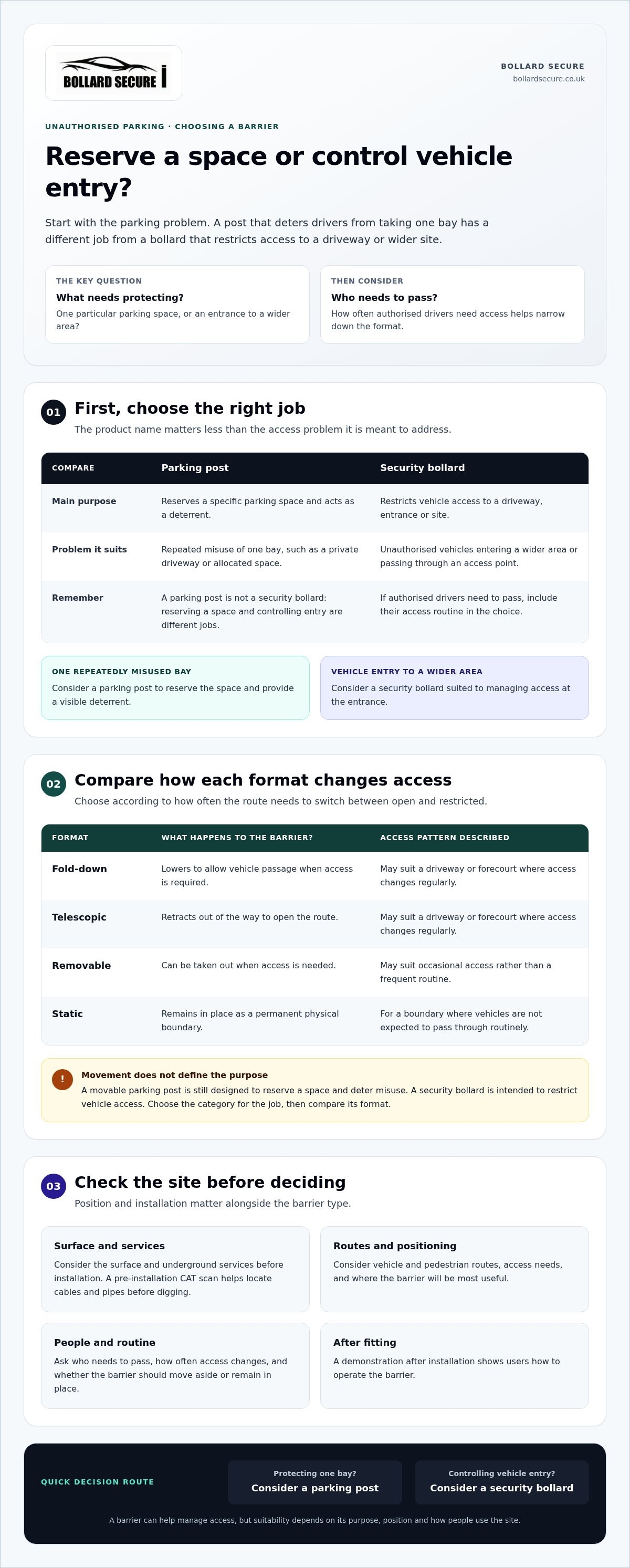
An uninvited vehicle in a private driveway, commercial forecourt or allocated bay can disrupt access and leave the intended user without a space. Start by identifying what needs protecting: one particular parking space, or the entrance to a wider area. The distinction matters because the right barrier depends on the parking problem and whether authorised drivers need to pass through.
A bollard is a physical barrier used to manage or restrict vehicle access. Bollards appear in settings ranging from traffic control and pedestrian protection to private site access. The broader role of a Traffic bollard helps explain why the term covers barriers with different purposes. For parking, distinguish a post that reserves a bay from a barrier intended to control vehicle entry.
Neither type guarantees that a vehicle will never park in the wrong place or that a site will be completely secure. A barrier can help manage access, but its suitability depends on its purpose, position and how people use the site.
What is the difference between a parking post and a security bollard?
A parking post is designed to reserve a specific space and act as a deterrent. It can suit a bay where the main issue is repeated misuse, such as a private driveway or allocated parking space. However, a parking post is not a security bollard: reserving a space and controlling vehicle access are different jobs.
A security bollard is the relevant category when the aim is to restrict vehicle entry, such as keeping unauthorised vehicles out of a driveway or site. Choose according to the access requirement, not simply because both products are called posts or bollards. If authorised drivers need to pass, include how they will use the entrance in your decision.
Where can unauthorised parking become a problem?
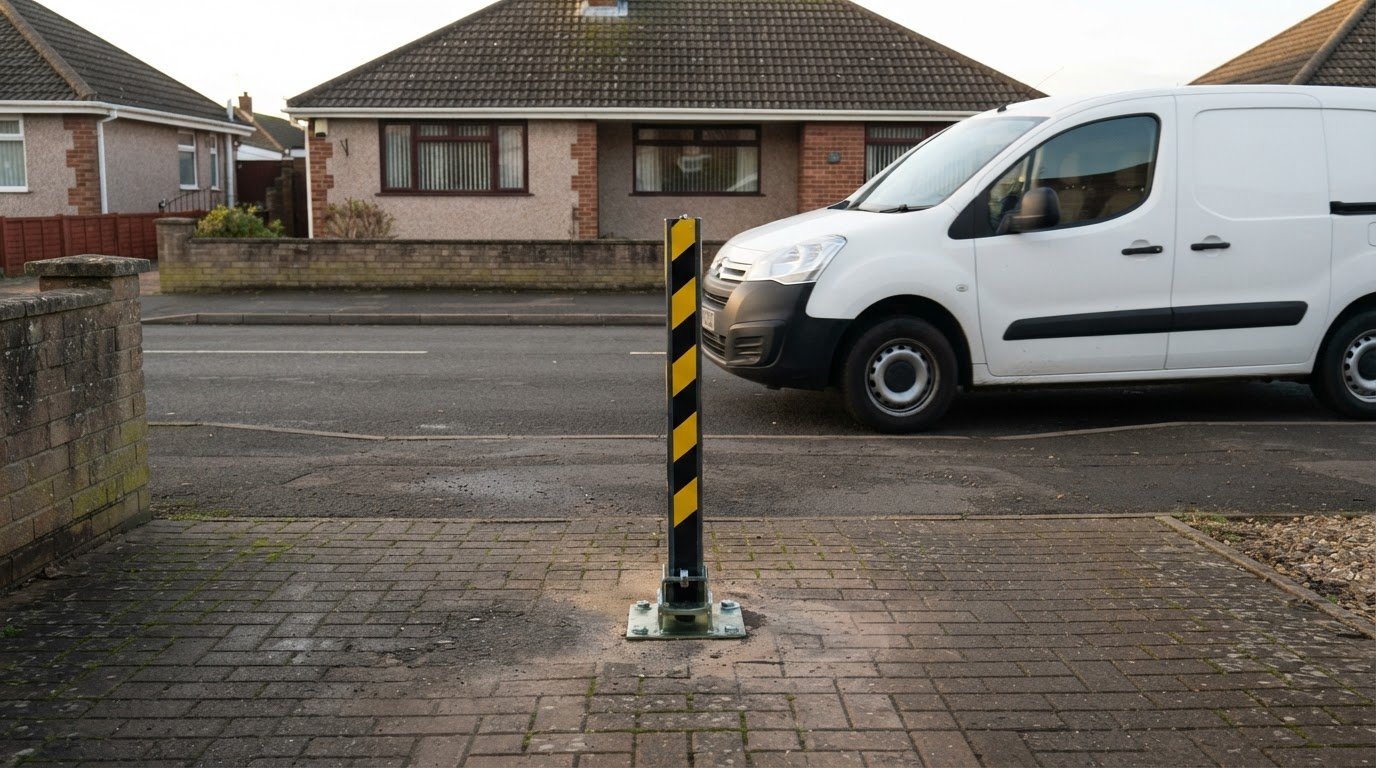
On a private driveway, someone may repeatedly take a household’s space. On a commercial forecourt, an unauthorised vehicle could occupy an area needed for customers, staff or deliveries. An allocated parking area can face the same problem when drivers use a bay assigned to someone else. In these situations, the priority may be deterring use of a particular space.
A different solution may be needed when vehicles must be kept out of a larger site or entrance. A barrier at the access point may be more relevant than a post beside an individual bay. Consider who needs entry, how often they arrive and whether authorised users need access to remain available. This helps distinguish a parking nuisance from a wider access-control problem.
One repeatedly misused bay: consider a parking post to reserve the space and provide a visible deterrent.
Vehicle entry to a wider area: consider a security bollard suited to managing access at the entrance.
Use this distinction as your starting point. It narrows down the barrier category before you compare designs or plan installation.
Which bollard types can help control unauthorised parking?
Bollard formats differ in how they change access. Some can be lowered or retracted so authorised vehicles can pass; others can be removed when access is needed occasionally, or remain in place as a fixed boundary. Choose according to how often the space needs to switch between open and restricted, and whether you’re reserving one bay or controlling entry to a wider area.
Movement alone doesn’t determine a barrier’s purpose. A parking post, including a movable one, is designed to reserve a space and act as a deterrent. A security bollard is intended to restrict vehicle access. Choose the right category for the job rather than assuming every movable post provides the same kind of access control.
Fold-down: lowers to allow vehicle passage when access is required.
Telescopic: retracts out of the way to open the route.
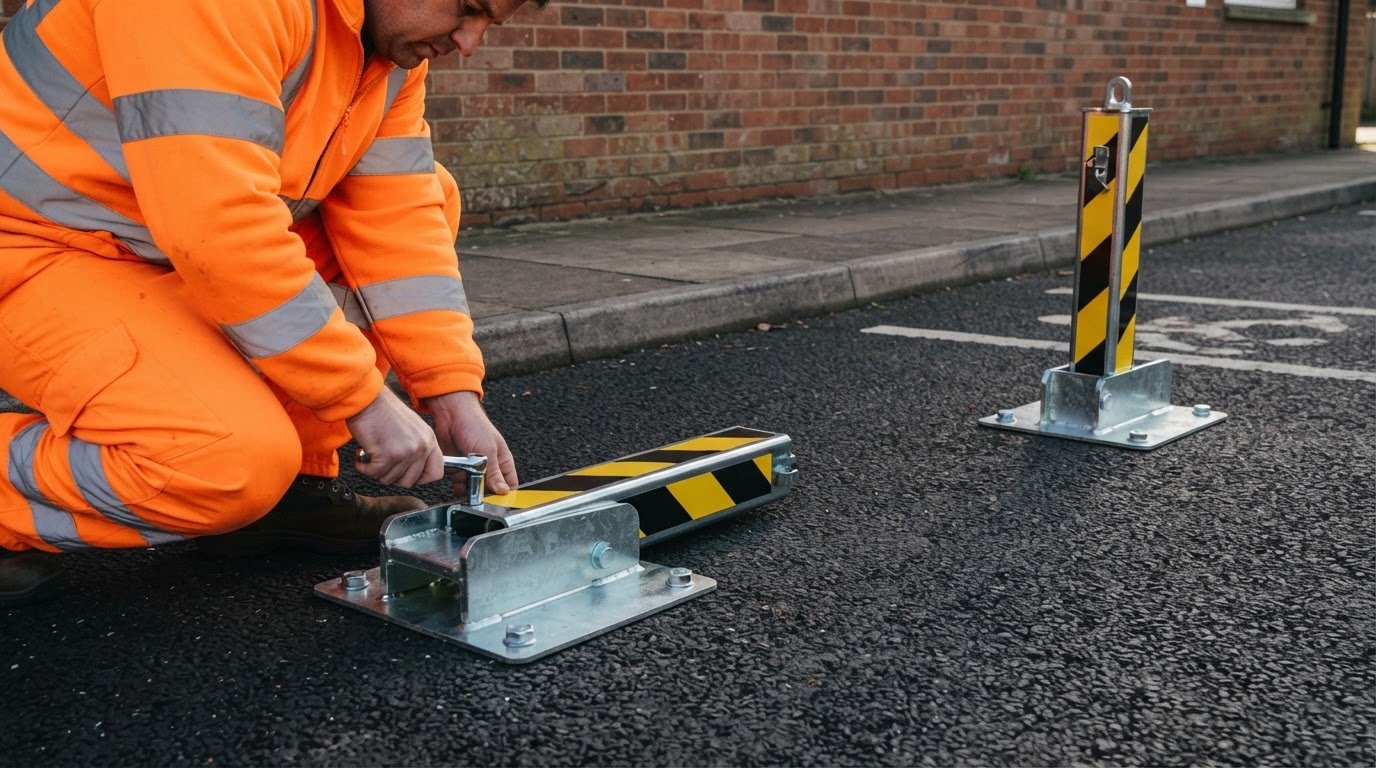
Removable: can be taken out when occasional access is needed.
Static: provides a permanent physical boundary, rather than routine vehicle passage.
These distinctions help narrow your options before you consider the details of your site and a particular product.
When might a fold-down or telescopic bollard suit a site?
These formats may suit a driveway or forecourt where access needs to change regularly. Lowering or retracting the barrier lets an authorised vehicle through, then allows the entrance or space to be restricted again. If users need to open the route as part of their normal routine, compare these movable options. The fold-down bollard for a driveway guide explores that format in more detail.
When might a removable or static bollard be more appropriate?
A removable bollard may suit a site where access is needed occasionally rather than as part of a frequent routine. A static bollard serves a different purpose: it marks a lasting physical boundary where vehicles aren’t expected to pass through routinely. For a driveway where the barrier needs to be removed at times, the removable bollards for driveways buying guide provides more detail.
Picture how people will use the entrance over a typical week. Who needs to pass, how often will access change, and should the barrier move aside or remain in place? The answers can rule out formats that would make everyday access awkward. For help moving from product choice to an installation plan, explore Bollard Secure’s bollard options.
How to Match a Bollard to the Parking Problem
Start with the outcome you need, not the product name. Is one allocated bay being used without permission, or do you need to keep vehicles from entering a driveway or forecourt? Then consider how often authorised drivers need access. This gives you a practical shortlist before you compare bollard formats.
Use this as a starting point, not a guarantee of a particular result. A parking post is designed to reserve a space and act as a deterrent. It isn’t equivalent to a security bollard for controlling vehicle access. Choosing according to the actual problem helps avoid expecting a space marker to do the job of an access barrier.
Is the main aim to reserve a parking space?
If a single allocated bay is repeatedly occupied, a parking post can make the reservation visible and deter unauthorised use. Consider who is entitled to use the space and how they will enter and leave it. Positioning matters: the post must not obstruct intended pedestrian movement or authorised vehicle access. It can help manage the bay, but it can’t guarantee that nobody will misuse it.
Do you need to restrict access to a driveway or site?
If the objective is to control vehicle entry, a security bollard is the more relevant category. Consider who needs access and how frequently. Regular passage points towards a format that can be moved, while infrequent access may suit a removable option. If vehicles aren’t expected to pass through routinely, a static barrier may be appropriate. The right format depends on the site and its access routine.
For a forecourt, map the vehicle route and note where pedestrians need to pass before deciding on a position. A barrier placed without considering these movements could create a new obstruction instead of solving the original parking problem. Match the product category to your access plan, then consider the site and fitting requirements. Bollard Secure can help carry that choice through to installation; explore bollard options and installation.
Checks Before Placing Bollards for Unauthorised Parking
Good planning starts before you choose a barrier. Its position, the ground beneath it and the way people use the site all affect installation. Work through these checks before arranging fitting. They help ensure that bollards to stop unauthorised parking manage access without creating avoidable problems for drivers or pedestrians.
Define the access need. Decide whether you’re reserving one space, controlling an entrance or restricting vehicle access to a wider area. Note who needs to pass and how often.
Check the location. Consider the surface, proposed barrier position and routes used by vehicles and pedestrians. Account for entrances, exits and clear paths.
Select the barrier category. Match the access pattern to a parking post or security bollard, then consider whether a movable or static format is appropriate.
Plan the fitting. Have the surface and fixing method assessed before installation, especially if work will involve digging. Check any planning questions before proceeding.
How do ground conditions and underground services affect installation?
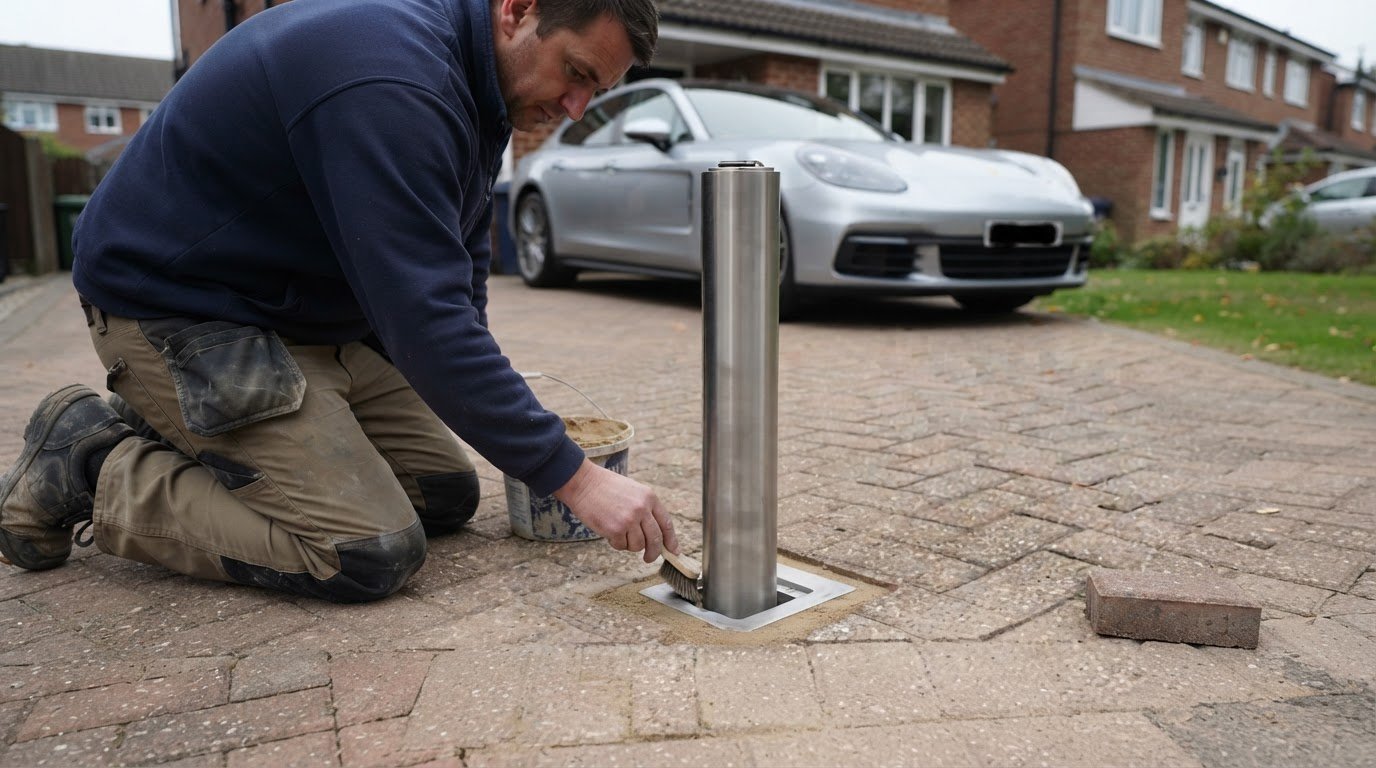
Concrete, tarmac and block paving may be suitable surfaces, but suitability depends on the site, barrier and fixing method. Assess the surface first rather than assuming one installation approach will work everywhere. Digging also needs care: underground cables and pipes may lie beneath the proposed position. Bollard Secure carries out a pre-installation CAT scan to help locate these services before digging, so the fitting plan takes them into account.
How should bollard position support access?
Map the intended vehicle route before settling on a position. Can authorised drivers enter and leave without awkward manoeuvres? Will a lowered, retracted or removed barrier leave the route clear? Consider pedestrian movement too, including paths to entrances and across the forecourt. Where several bollards are used, plan their spacing together so they manage vehicle access without creating an unnecessary obstacle for people.
Also consider whether the proposed position affects access shared with other authorised users. A barrier that solves one parking issue but blocks a required route can create another problem. Make the intended access pattern clear during the site assessment so the location and fixing plan can be considered together.
Planning permission is usually not needed for bollard installation on private land. If you’re unsure whether your property or proposal is an exception, check with your local authority before work begins. This is separate from assessing the physical site: both the permissions question and the ground conditions matter when planning an installation.
Once you’ve defined the access need and considered the location, Bollard Secure can help progress from site assessment to fitting. Arrange a bollard installation with a plan that takes the surface, underground services and everyday access into account.
From choosing a bollard to professional installation
Once you’ve identified the access problem and a suitable barrier type, plan the fitting. Bollard Secure offers a supply-and-install service, bringing product selection and fitting together, as well as an installation-only service for customers who have already purchased a bollard. In either case, the site and intended access pattern inform the installation plan.
The process starts with a free, no-obligation quotation. The site assessment considers the proposed position and whether the surface is suitable for the chosen barrier and fixing method. If digging is required, Bollard Secure carries out a pre-installation CAT scan to help locate underground cables and pipes before work begins. After fitting, the installer demonstrates how to use the bollard.
What happens during professional bollard fitting?
Before work starts, the site check assesses the ground and proposed fixing. Surface conditions can affect whether a location is suitable and how the barrier should be fitted. Where digging is needed, the CAT scan helps locate underground services in the work area. Once fitting is complete, the installer demonstrates the product’s operation so you can see how it works in practice.
The installation charge includes travel, labour and materials. Most installations are completed in a few hours, although the time can vary depending on the site and product. Plan around the specific job rather than assuming every fitting will follow the same schedule. Professional installation helps put your chosen bollards to stop unauthorised parking into a practical arrangement for day-to-day access.
What should you expect after choosing a solution?
After your enquiry, Bollard Secure provides a free, no-obligation quotation, typically responding within 24 hours. The quotation gives you a clear starting point before deciding how to proceed. Most products are made to order, so delivery timing varies by item rather than following one universal lead time.
Before accepting the plan, make sure the proposed barrier and position reflect how authorised users will enter, exit and move around the site. If fitting involves digging, the CAT scan helps locate underground services; the site assessment also considers the surface and fixing method. After installation, the demonstration shows you how the product works and how to operate it.
For a straightforward next step, request a free, no-obligation quotation for your bollard installation.
Take the next step towards a better-managed entrance
The right barrier should support the way your site works, not simply block a vehicle. Before moving ahead, decide who needs access, how often they need it and what the barrier should achieve. That gives you a practical starting point for choosing bollards to stop unauthorised parking and planning a solution for your site.
Bollard Secure provides professional installation across the UK, with a 5-star rating, Sold Secure Approved status and Fully Insured cover. Where digging is required, installers carry out a CAT scan to help locate underground cables and pipes, then demonstrate how to use the product after fitting. These steps help you move from selection to installation with the site and access routine in mind.
Ready to discuss an approach for your driveway, forecourt or allocated space? Request a free, no-obligation quotation and take the next step towards managing vehicle access.
Frequently Asked Questions
Are bollards effective at stopping unauthorised parking?
Bollards can help manage vehicle access, but they can’t guarantee that a particular space will never be misused. Their usefulness depends on choosing a barrier that suits the site and placing it where it addresses the access problem. Controlling a forecourt entrance, for example, calls for a different approach from marking one allocated bay. Think of bollards to stop unauthorised parking as a practical access measure, not a promise of a specific outcome.
Is a parking post the same as a security bollard?
No. A parking post is designed to reserve a parking space and act as a deterrent; it isn’t a security bollard. If someone regularly takes a marked bay, a post may help make its allocation clear. If you need to restrict vehicles entering a driveway or site, consider a security bollard instead. Base the decision on whether you’re managing a space or controlling access, not on appearance alone.
Which bollard is best for stopping someone parking on a driveway?
The right option depends on who needs to use the driveway and how often. A parking post may suit a space that needs to be visibly reserved, while a fold-down or telescopic security bollard may be more appropriate if authorised vehicles need to pass through regularly. For access needed only occasionally, consider a removable bollard. Think through your usual routine before choosing, rather than selecting a format based only on the driveway’s appearance.
Can a fold-down bollard be used when authorised vehicles need access?
Yes. A fold-down bollard can be lowered to let an authorised vehicle pass, then raised again when access needs to be restricted. This can suit a driveway used by residents or staff who need to come and go. Consider who will operate it and whether that movement fits the site’s daily routine. A fold-down design allows passage when lowered, but vehicle and pedestrian routes still need to be planned.
Do I need planning permission to install a bollard on private land?
Planning permission is usually not needed for a bollard on private land, but the answer can depend on the property and proposed work. If you’re unsure, check with your local authority before proceeding. This guidance concerns private property and shouldn’t be taken as permission to install a barrier on a pavement or other public land outside your boundary.
Can bollards be installed on concrete, tarmac or block paving?
Installation may be possible on concrete, tarmac or block paving, but the surface and fixing method need to be assessed for the specific site. Don’t assume the same approach will suit every forecourt or bollard. The condition and construction of a paved area can affect where a barrier can be fitted. Bollard Secure checks surface suitability before installation to determine whether the proposed position and fixing method are appropriate.
What happens during a professional bollard installation?
The installation begins with a site assessment of the proposed position, ground and fixing requirements. If digging is needed, Bollard Secure carries out a pre-installation CAT scan to help locate underground cables and pipes. The bollard is then fitted, and the installer demonstrates how to use it. The installation charge includes travel, labour and materials. Most installations are completed in a few hours, although timing varies with the site and product.
Comments