
Choose a Security Bollard for Driveway Protection and Access
Driveway bollards can help restrict unauthorised access, but effectiveness depends on choosing a type that suits the security risk and how you use your entrance. To understand how to choose a security bollard, weigh the protection you need against access requirements, ground conditions and the appearance of your property. A bollard suited to a driveway used every day may not be right for an entrance that should usually remain closed.
Look beyond how sturdy a bollard appears. A fixed option creates a permanent obstruction, while removable or retractable designs allow vehicles through when needed. Installation matters too: the surface and any underground services can affect which fixing method is suitable.
This guide explains how different bollards work and what to consider before choosing one. You’ll learn how driveway effectiveness, installation, removability, appearance and security purpose shape the decision, so you can match the bollard to your property and access needs.
Table of Contents
Removable bollards
Removable bollards suit driveways where vehicles need occasional access, but the entrance should be protected at other times. They offer a flexible alternative to a permanent barrier. The guide recommends them when a lower level of driveway security is needed and access must sometimes be allowed. Consider how often the bollard will be removed, and who needs to operate its lock.
Fixed, removable and retractable bollards solve different access problems. Fixed bollards stay in place, making them suitable where vehicles should always be restricted. Removable bollards lift out of a ground socket; telescopic bollards retract into an underground casing; fold-down bollards hinge down to clear the route. For a driveway used by several vehicles, choose the format that makes access changes straightforward.
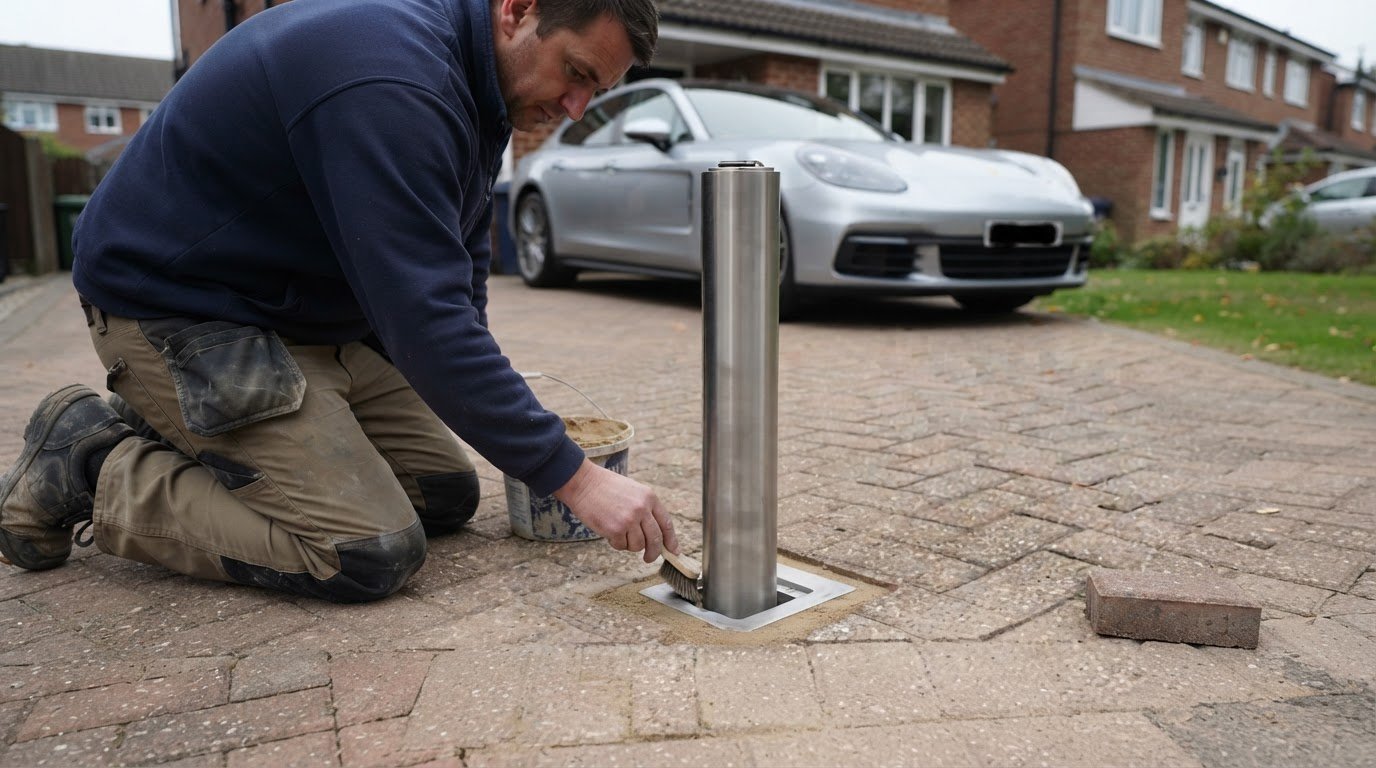
A typical removable bollard is secured in a sleeve fitted into a drilled hole. Its locking device holds it in place and can be deactivated when the bollard needs removing. Once lifted out, it leaves a flush ground socket with a covered lid. That keeps the driveway surface clear for a car to pass. Before installation, consider where the removed bollard will be stored and whether the socket lid will remain easy to reach.
Underground services and ground conditions can affect installation. A removable bollard may suit a position where a deeper foundation is unsuitable, but it still needs a suitable location and surface for secure fitting. Plan around vehicle paths, gates and pedestrian access. A misplaced socket can make everyday entry awkward, even when the bollard itself is easy to remove.
Use this practical sequence to assess removable driveway bollards:
Set the access pattern: identify when vehicles must pass, such as a delivery or a second car leaving.
Assess the ground: account for services and conditions that could restrict a deep installation.
Plan removal: choose a storage spot and keep the socket lid accessible when the bollard is out.
Review upkeep: schedule periodic cleaning and maintenance for the ground socket.
Socket maintenance matters because dirt can collect where the bollard fits. Keep the opening clean and use the cover when the post is removed. Removable designs clear the driveway, but their sockets need attention. A covered, flush socket also keeps the surface clear when access is open.
Appearance and material should support the setting, not distract from the security purpose. Aluminium is lightweight and malleable, making it suitable for decorative or removable bollards. Some removable bollard models are designed to provide additional security, but protection varies by model. Those standards can help inform a comparison, but they don’t make every removable design equivalent. Match the selected model to the access pattern and required protection.
Are Driveway Bollards Effective?
Driveway bollards can deter vehicle theft and restrict unauthorised entry when their type, position and operation suit the site. Fixed, removable and retractable options differ in access, effort and the protection they provide.
Security Against Theft and Unauthorised Access
Bollards create a physical obstacle that can prevent vehicles entering a driveway or leaving with a parked car. Their effectiveness depends on matching the design to the risk, rather than assuming every post is an impact barrier.
A Home Office study found that physical security measures such as bollards reduce the likelihood of vehicle theft by over 50%. Fixed bollards suit entrances where vehicle access is always restricted. Removable or retractable types provide flexibility where access must sometimes be allowed. For example, a household receiving deliveries may need a different arrangement from a closed vehicle entrance.
Visibility, Accessibility and Spacing
Visibility helps drivers and pedestrians notice bollards before reaching them. Position and spacing should restrict vehicle access without obstructing people. Reflective tape can make a bollard easier to see, while lighting can improve visibility around an entrance.
Plan spacing around the vehicles using the driveway and the pedestrian route beside it. Gaps should prevent vehicles from exploiting the space, while remaining easy for people to pass through. The guide recommends an air gap of no more than 1,200 mm between bollards to support pedestrian movement and safety. In shared car parks, clear sightlines help drivers understand where traffic can pass.
Access Control and Ease of Operation
Access control determines who can open a route and how a bollard operates. Automatic bollards rise and retract to manage vehicle entry and may integrate with systems such as CCTV, intercoms or key fobs. Their control panel manages opening and closing.
Automatic systems suit entrances with frequent vehicle movements, but require electrical installation, adding cost and time. Manual removable bollards avoid that electrical installation and use a lock to secure them. Semi-automatic rising bollards need no electrical power supply. Compare these operating demands with how often access changes and who will operate the system.
Maintenance and lifespan depend on use, exposure and the mechanism. Keep removable bollard sockets clean, and inspect locks, moving parts and electrical controls for wear or damage. Repairs may involve a jammed socket, damaged locking mechanism or faulty control component; regular attention helps identify problems before operation is affected.
Impact Ratings and Crash-Test Standards
Impact ratings describe tested resistance, while a crash-test standard sets the basis for assessing performance. PAS 68 and ISO 22343 are standards used to test crash-rated bollards. Compare the stated test performance against the threat the site needs to address, not appearance alone.
For UK vehicle access control, these standards relate to crash testing, not every access decision. Consider pedestrian routes, visibility and how authorised vehicles enter alongside the required impact protection. Crash-rated bollards can protect buildings, pedestrian areas and sensitive locations against vehicle impacts; a standard driveway post may serve a different purpose. If you’re weighing options for an entrance, bollard types for driveway access can help frame the choice.
Surface-mounted versus concrete-embedded installation
The fixing method affects stability, excavation and suitability for the ground. Choose between a bolt-down plate and an embedded foundation by considering the site, security purpose and how permanent the barrier needs to be.
Ground Conditions and Installation Requirements
Ground conditions determine whether installation can involve excavation or needs a surface fixing. Fixed bollards are commonly embedded, with a hole dug and concrete poured to anchor them. Fixed steel bollards are normally embedded to a depth of up to 400 mm. This approach suits a permanent position where the layout is unlikely to change.
Telescopic bollards need an underground steel outer casing installed within a concrete foundation. The post then retracts into that casing when access is needed. If underground cables or pipes prevent deep installation, removable bollards may be suitable. They use a socket set into a drilled hole, rather than the deeper foundation required by some other designs.
Assess the ground and intended use together. Buried services may rule out deep excavation in a proposed position, and poor ground can affect which installation method is suitable. Fold-down bollards can be an option where access needs to be controlled without the deeper installation associated with some designs.
Installation Costs and Positioning
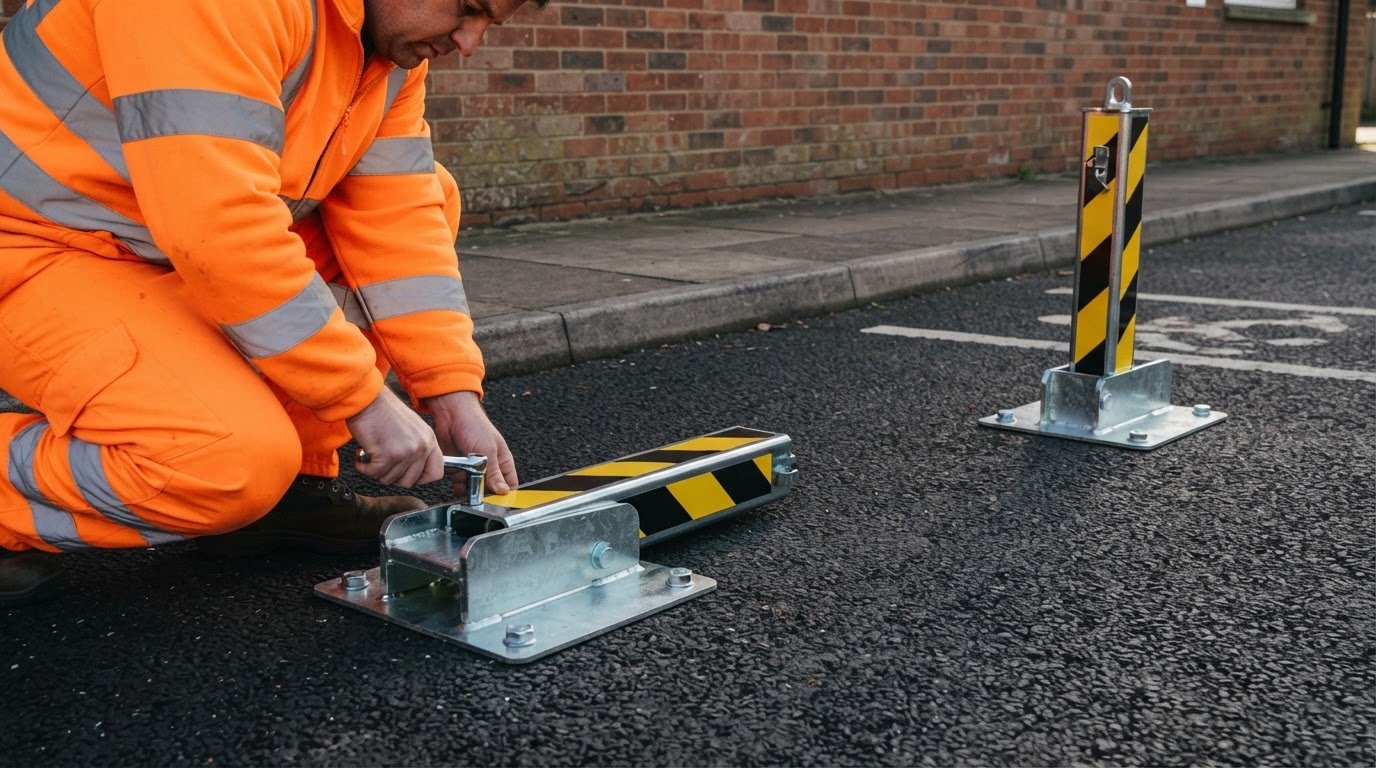
Installation costs depend on the fixing method, excavation and ground conditions, so compare the work involved rather than the post alone. Concrete embedding requires digging and pouring concrete. A bolt-down fixing plate avoids excavation, where that fitting is suitable. Surface mounting can reduce ground disturbance, but the mounting choice must still match the application and site conditions.
Positioning affects both protection and everyday use. Mark the intended line before installation, accounting for vehicle movement, gates and pedestrian access. A bollard too close to a turning point can obstruct a car; one too far from the protected area may leave an approach open. In a parking area, plan how vehicles enter and leave before fixing posts in place.
For a permanent boundary, embedded fixed bollards provide a stable installation. Where access needs to change, telescopic or removable designs offer flexibility, but their underground components still need suitable preparation. A bolt-down plate can be used for fixed bollards where excavation is unsuitable. Choose the fixing method that fits both the ground and the security purpose.
Before work begins, identify underground services and mark the exact positions. Match the installation method to the surface, expected vehicle access and required permanence. This helps prevent a foundation or socket from conflicting with the driveway’s everyday use.
Appearance and colour choices
A bollard is both a security measure and a visible feature of a driveway or car park. Compare its size, material and colour with the entrance. A compact residential entrance may suit a simple profile, while a public-facing frontage may call for a more considered design. Appearance should support the barrier’s purpose, not obscure it.
Consider the setting around the proposed position. A bollard beside a brick wall may be less prominent in a complementary colour, while a contrasting finish can make it easier to see against paving or a dark entrance. Choose a material, size and finish that suit both the surroundings and the bollard’s function.
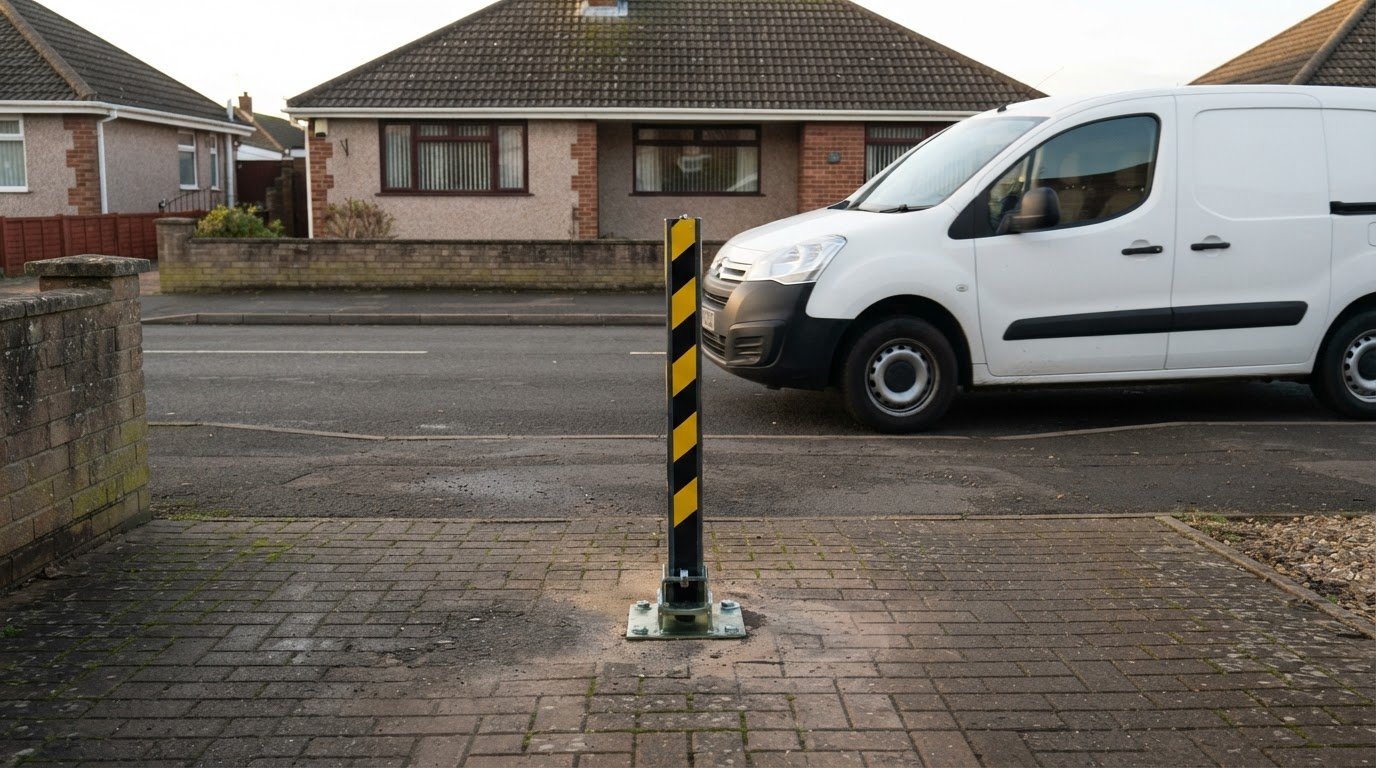
Visibility matters where vehicles and pedestrians share space. A bright finish can help a bollard stand out in settings such as building sites, but may feel out of place on a home driveway. Consider how clearly the post needs to be seen. Reflective tape can improve visibility without making the whole bollard brightly coloured.
Material affects the appearance over time. Recycled plastic bollards have limited colour and finish options. Polyurethane bollards may fade slightly after long exposure to UV, which can change their look in exposed positions. Steel offers a robust, corrosion-resistant option. Match the material and finish to the location, especially if the bollard will remain visible throughout the year.
Think about how much of the bollard needs to remain in view. Retractable rising bollards can preserve a property’s visual appearance when lowered, then provide a visible barrier when raised. Decorative bollards can add aesthetic appeal to building fronts or public pavements, whilst architectural bollards can give public spaces character. These designs still serve different roles, so assess appearance alongside the security purpose.
Use this short review before selecting a finish:
Compare the setting: look at paving, walls and nearby barriers.
Check visibility: consider contrast, reflective tape and lighting conditions.
Consider exposure: account for UV exposure when choosing polyurethane.
Review the open position: decide whether a retractable design would better suit the property’s appearance.
For a driveway used daily, choose a design that is easy to see without dominating the frontage. In a car park, visibility may matter more than a subtle finish. Balance appearance and practical visibility with the bollard’s role as a security barrier.
Choosing bollards for the intended security purpose
Start with the threat, then select a bollard designed for that job. A driveway post that discourages casual entry isn’t automatically suitable for stopping a deliberate vehicle impact. Bollards provide different levels of access control, traffic guidance and physical protection. The key is to match the design and tested performance to the site’s actual security purpose.
For a private driveway, preventing unauthorised parking or vehicle access may be the main objective. Removable, telescopic and fixed bollards each manage access differently, so consider whether vehicles need to pass regularly. A fold-down parking post can mark a reserved space, but it isn’t designed to provide impact resistance. Choose a functional access deterrent for that purpose, not as a substitute for a crash-rated barrier.
Where protection against a vehicle impact is required, look for evidence of crash testing. PAS 68 and ISO 22343 are standards used to test crash-rated bollards. These products are designed to withstand significant impacts and can protect buildings, pedestrian areas and sensitive locations. Compare the stated test performance with the risk at the site. A decorative or architectural bollard may enhance a frontage, but it’s typically less impact-resistant than a security-focused option.
For heavier impact demands, steel bollards can withstand heavy impacts, whilst concrete is another robust material used for impact-resistant security bollards. Material alone doesn’t establish a tested impact rating. Check whether the specific bollard has been crash-tested to a named standard, and consider how its installation supports the intended protection. Telescopic bollards can offer access flexibility, but their operating format alone doesn’t establish high-security performance.
Match the level of protection to who and what needs protecting. A bollard marking a pedestrian area has a different job from one protecting a building against vehicle attack. Polyurethane bollards aren’t designed for high-security or anti-ram use. Semi-automatic rising bollards aren’t intended or built for high-security use either. These distinctions matter: selecting a product beyond its intended function can leave the site exposed to the very risk it needs to manage.
Discourage casual access: prioritise access control and the required day-to-day operation.
Protect a parking space: use a parking post for space management, not impact resistance.
Address vehicle-impact risk: compare crash-test evidence against PAS 68 or ISO 22343.
Protect pedestrians or a building: choose a security purpose and tested performance suited to that asset.
Define the threat and protected area before settling on a type. Explore security bollard options to compare solutions for different access and protection needs.
Bollard Secure: Fold-down Bollards
Bollard Secure supplies and installs fold-down bollards for driveways where you need to secure an entrance and lower the barrier for vehicle access. The right type depends on how often access changes, the ground conditions and the protection you need.
For a flexible driveway entrance, compare fold-down bollards with telescopic or removable bollards. Parking posts can reserve designated spaces, while removable bollards can be taken out when access is needed. Each option handles access differently, so consider how it will fit your daily routine.
If you have considered your security purpose and installation needs, request a free, no-obligation quotation from Bollard Secure to discuss a suitable option for your site.
Make your next step a practical one
Before deciding how to choose a security bollard, picture your driveway in everyday use. Consider who needs access, how deliveries will enter and whether the security measure will work with your routines. This practical view can turn a general preference into a clear brief for the right type of bollard.
Bollard Secure supplies fold-down and telescopic bollards, as well as parking posts for different driveway and access needs. Discuss how your entrance is used and what you need to protect. This can help narrow the options around your site, rather than choosing on appearance alone.
Contact Bollard Secure to discuss your options and take a considered step towards a driveway solution that fits your needs.
Frequently Asked Questions
How to choose a security bollard for your premises?
Start with what you need the bollard to prevent, then consider how the entrance operates. For a home driveway used by several cars, weigh straightforward access against the protection required. For a yard with occasional deliveries, consider how visitors enter and where vehicles wait. Ground conditions, pedestrian routes and how often access is needed help narrow the choice. This is the practical basis for deciding how to choose a security bollard.
What materials should be used?
Choose a material according to the environment and the level of protection required. Steel can withstand heavy impacts, whilst concrete is recommended for impact-resistant security bollards. Stainless steel grade 304 suits general environments; grade 316 offers extra resistance to salt and moisture. Recycled plastic is less rigid than steel or concrete. For a coastal or exposed site, consider the material’s resistance to its surroundings as well as its security function.
What sort of security bollard would best suit me?
The right type matches your access routine and security purpose. A fixed bollard suits an entrance that should remain closed. For a driveway needing occasional vehicle access, consider a removable, telescopic or fold-down design. If your main aim is to reserve a parking bay, a parking post can mark the space, but it is a deterrent, not a security bollard. Distinguish access control from impact protection when comparing options.
What security bollard types are available: fixed, removable, retractable and automatic?
Fixed bollards provide a permanent obstruction, while removable models lift out to allow access. Retractable bollards lower into the ground, and automatic models rise and retract to control vehicle entry. Automatic systems require electrical installation and servicing; semi-automatic rising bollards do not need an electrical power supply. A manual removable model avoids electrical controls but requires someone to unlock and lift it. Choose based on how access is managed day to day.
How do I calculate the required bollard spacing and setback?
Set spacing to prevent vehicles passing through gaps, while leaving a usable pedestrian route. The guide recommends an air gap of no more than 1,200 mm between bollards to support pedestrian movement and safety. Setback depends on what you’re protecting and the vehicle’s approach: position the line to block access before a vehicle reaches the asset, without obstructing gates or turning movements. Mark the layout against actual vehicle paths before installation.
What foundation depth and ground conditions are needed for a security bollard?
Foundation requirements depend on the bollard design and the ground. Fixed steel bollards are normally embedded to a depth of up to 400 mm, whilst telescopic models need an underground steel casing set within a concrete foundation. Buried cables or pipes can restrict deep excavation, and poor ground conditions affect suitable fixing methods. Identify services and assess the proposed position before choosing the foundation type. A bolt-down fixing plate can suit fixed bollards where excavation isn’t possible.
How do steel, stainless steel, concrete and polymer bollards compare for strength and durability?
Steel can withstand heavy impacts, and concrete is recommended for impact-resistant security applications. Stainless steel grades 304 and 316 suit different environments: grade 304 suits general settings, whilst grade 316 offers extra resistance to salt and moisture. Recycled plastic is less rigid than steel or concrete. Polyurethane can fade slightly after long UV exposure and isn’t designed for high-security or anti-ram use. Match the material to both the threat and site conditions.
How much do security bollards cost in the UK, including installation?
Total cost depends on the bollard, the number of positions, ground conditions and the installation work required. Surface fixing and embedded foundations involve different site preparation, so compare the full installed scope rather than the product alone. Define your access needs, the number of positions and the ground conditions before requesting a project estimate.
Comments