
Choose the Right Anti-theft Bollard for Your Driveway
The most convenient bollard isn’t automatically the right security choice. The best anti-theft bollards for driveways in the UK depend on your surface, access routine and security needs. A telescopic bollard rises from the ground to block vehicle access and retracts when you need to drive through. A removable option may suit a site where underground services limit excavation depth.
Look beyond the bollard itself: its position and installation matter too. A raised barrier can obstruct a vehicle’s exit and make theft more difficult, but it must also suit your driveway and everyday routine.
This guide compares the main types, explains what to consider for different driveway surfaces and access patterns, and outlines what installation involves. You can use it to narrow your options and decide whether a manually operated bollard is practical for your driveway.
Table of Contents
Bollard installation depth and driveway surfaces
Installation depends on the bollard, its foundation and your driveway surface. Compare excavation requirements with your access routine before choosing a security post.
Driveway surface requirements
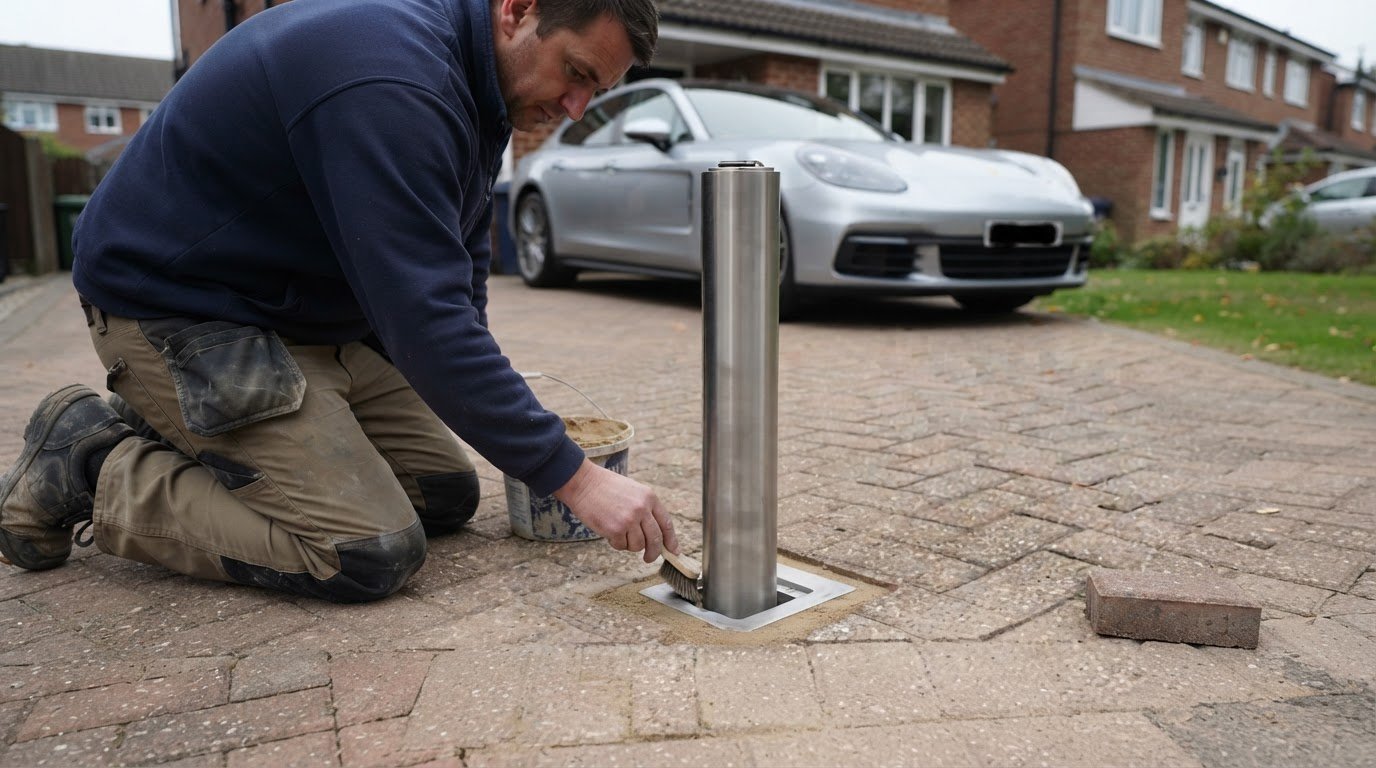
Block paving, concrete, tarmac, resin, paving slabs and gravel with a suitable base can all accommodate driveway bollards. The surface changes how installers reach and reinstate the foundation. A telescopic post usually needs excavation, a secure foundation and careful surface reinstatement. Removable bollards need a shallower foundation, which can suit sites where deeper excavation is difficult.
Gravel needs a suitable base for a stable installation, while paving slabs may need lifting and relaying around the ground socket. Stainless steel is a material choice, not a substitute for a secure foundation. Bollard Secure assesses the site to determine a suitable fixing method.
Underground services and installation
Buried pipes and wiring can limit excavation depth and affect where a bollard can go. Before digging, identify underground services and plan the installation around their routes. Where they restrict excavation, a removable bollard may be easier to accommodate than a telescopic post because its foundation is shallower.
Telescopic installation involves excavation, foundation work and reinstating the surface. Automatic systems add planning for power, controls and drainage. These requirements can affect installation costs, alongside the bollard type and surface repairs. An installer can assess the ground and explain the work involved.
Choose by matching the foundation depth to the ground and any buried services.
Can bollards obstruct pavements, dropped kerbs or emergency access in the UK? Poor positioning can block a route or access point. Keep the bollard within your driveway and clear of pedestrian paths, dropped kerbs and vehicle access routes.
What are the main safety risks? A raised bollard can create a trip or vehicle-impact hazard. Position it where drivers and pedestrians can see it, and lower or secure it when access is needed.
What do UK customer reviews say about leading brands? Reviews reflect individual experiences, not a universal verdict. Look for specific comments about lock operation, ease of lifting, fit and installation rather than relying on a brand name alone.
What type of driveway bollard should I choose?
Choose a bollard that matches your parking routine. A manual telescopic bollard rises from the ground to block access, then retracts when you need the driveway. It suits residential parking where someone can raise and lock it. For security, raise and lock the post whenever the vehicle is parked.
Automatic bollards suit access that needs to be controlled without manually lifting a post. They can operate by remote, fob, keypad or another access system. Their installation needs a cable run from the house to the bollard and control panel. Plan for that infrastructure before choosing automatic operation, particularly where driveway access is used regularly.
Lift-assisted telescopic security bollards reduce the effort needed to raise a post, which can make manual operation more manageable if you use the driveway often. Consider the effort involved in unlocking, raising and securing the bollard. A standard telescopic model may be sufficient when access is occasional.
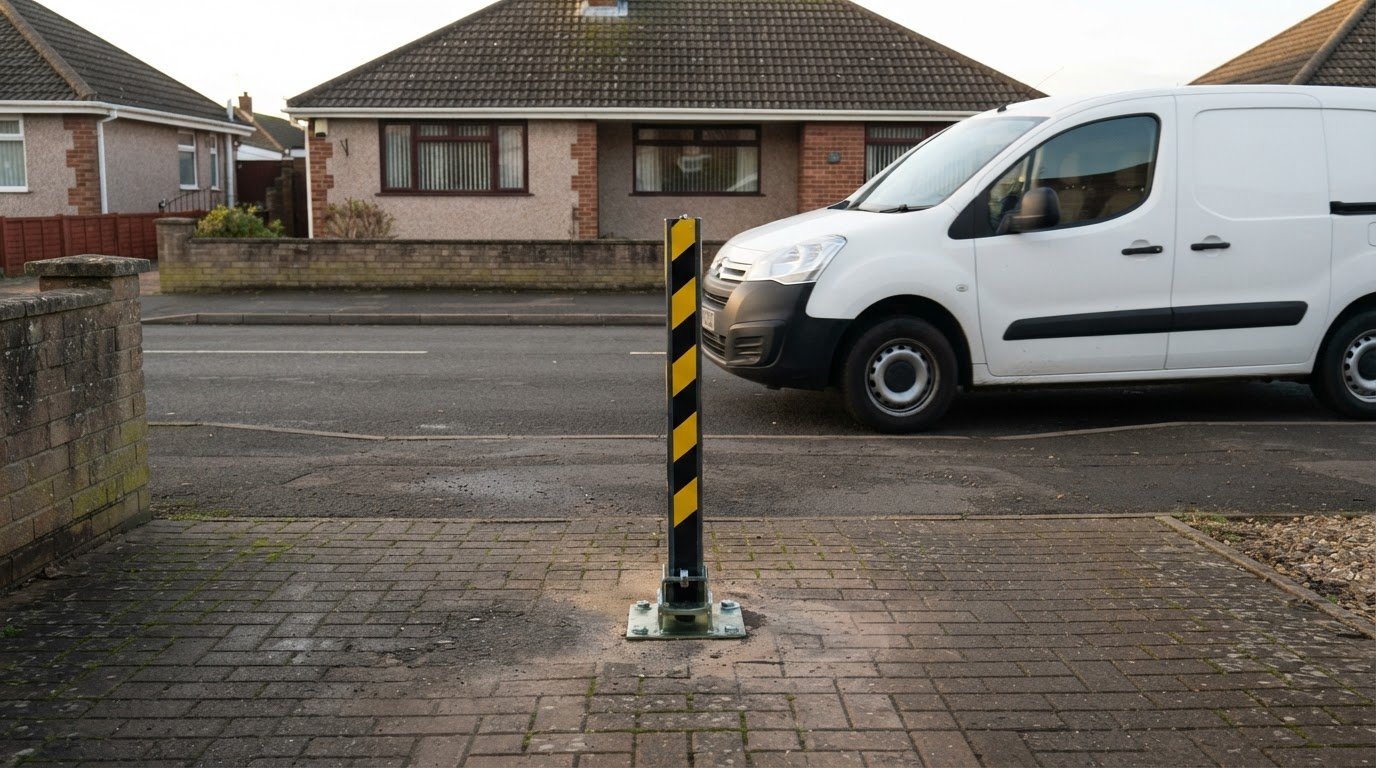
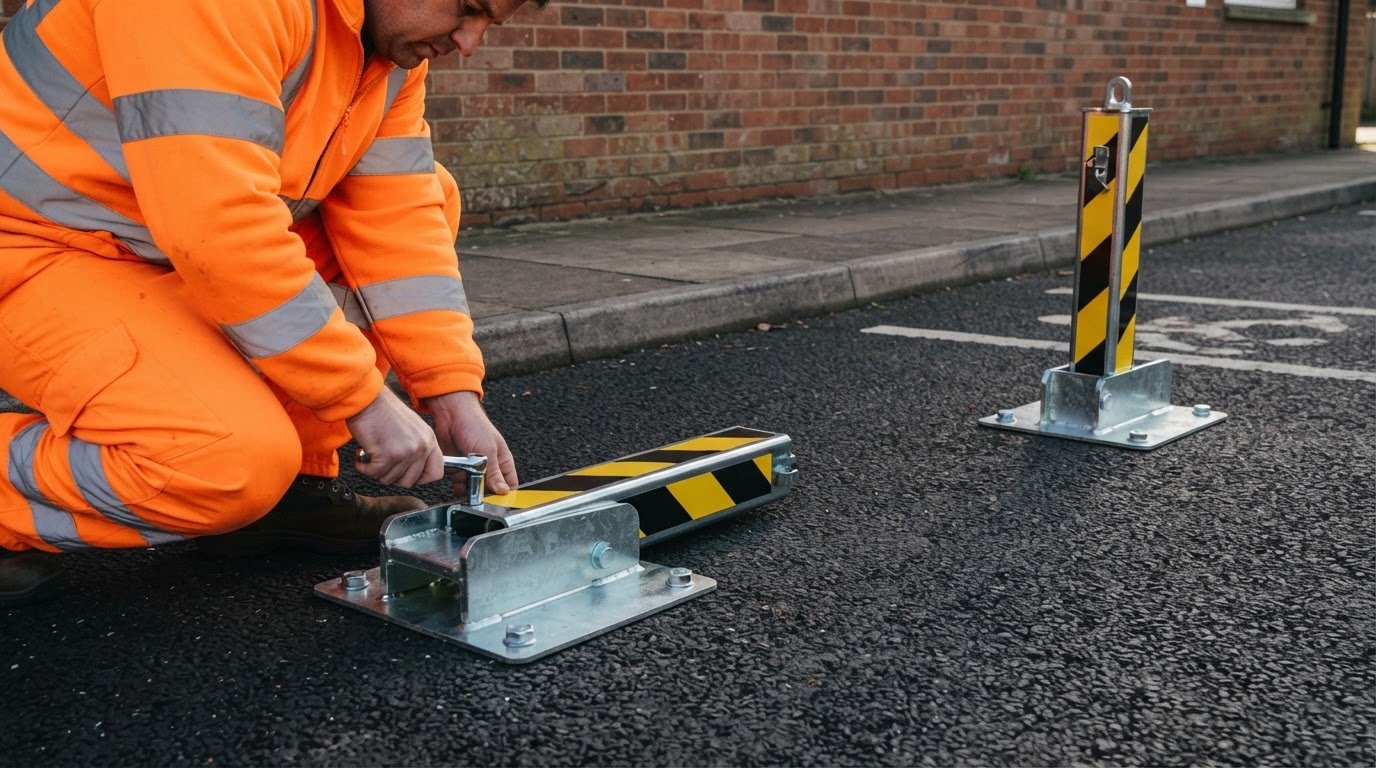
A fold-down bollard pivots onto the surface instead of retracting into the ground. It provides a visible post when raised and sits lower when folded down. A telescopic bollard retracts into a ground housing, so the choice depends on your driveway layout, surface and preferred operation.
What are the best-rated driveway security bollards in the UK? There isn’t one best choice for every driveway. Compare customer comments about lock operation, ease of lifting and residential suitability, alongside the security features that matter to you.
For a practical shortlist, compare telescopic and fold-down bollards by operation, access needs and installation requirements.
Choosing bollards based on access frequency and maintenance
Start with how often vehicles use the driveway. Occasional access may suit a manual telescopic security post, while frequent use can make repeated unlocking and raising less convenient. Choose a routine you can follow consistently, and raise and lock the post whenever the vehicle is parked.
Maintenance affects long-term durability. Driveway bollards should be serviced once a year. Include that check in your security routine, especially for a telescopic bollard that moves into and out of the ground. Keep debris clear around its opening and operate the post carefully. These simple habits support reliable movement and locking.
Match the bollard to the vehicle risk. A visible post can deter unauthorised access, but a domestic security bollard should not be assumed to provide impact resistance. High-security bollards are impact-tested, which matters when impact resistance is a priority. Check the exact product’s testing category before choosing.
Site conditions can affect the practical choice. A high water table may make it difficult to raise a telescopic bollard from the ground. Consider whether another bollard format better suits the location and your routine. Assess the entrance width, vehicle path and drainage conditions before choosing a position.
Occasional access: consider a manual telescopic post if the lifting routine is manageable.
Frequent access: weigh repeated manual operation against another arrangement.
Impact concerns: distinguish impact-tested high-security bollards from non-tested domestic posts.
Challenging ground: account for water conditions and how they affect operation.
Choose a driveway security post by balancing access frequency, site conditions and the required impact resistance. Plan annual servicing and a consistent locking routine to support dependable operation.
Effectiveness of driveway bollards against vehicle theft
A Home Office study found physical security measures, including bollards, reduce the likelihood of vehicle theft by over 50%. That finding supports bollards as one part of driveway security, not as a guarantee against every theft. A raised bollard can obstruct a thief’s exit route and make taking a vehicle take longer. That extra obstacle can disrupt a quick getaway.
Position matters. Place the bollard where it blocks the vehicle’s route out, rather than leaving a clear path around it. On a wide entrance, consider how the opening and parked vehicle affect coverage. A single post may not block every route, so plan around the driveway layout.
Consider the type of threat. Relay theft targets vehicles with keyless-entry technology, so a bollard restricts vehicle movement rather than the key signal itself. Manual and automatic bollards can both restrict access when raised. Choose based on how you operate the entrance and whether you can consistently secure the barrier when the vehicle is parked.
Installation also affects performance. A strong post needs suitable positioning and a secure foundation. Telescopic bollard installation involves excavation and surface reinstatement, while automatic systems also need planning for power, controls and drainage. A poor foundation or an awkward position can undermine the barrier’s practical role. Choose an installation plan that accounts for the ground and the vehicle’s path.
Check what a testing claim means before treating a bollard as impact-resistant. High-security bollards are impact-tested, while domestic security bollards should not be assumed to have the same testing. These categories are not interchangeable. Match the product’s stated testing status to the impact resistance your driveway requires, and keep the raised post visible to approaching drivers.
For a driveway barrier matched to your layout and security needs, compare available bollard options and installation choices.
Bollard Secure: Fold-down Bollards
Bollard Secure offers Fold-down Bollards for driveways where you want a barrier that can be lowered when vehicle access is needed. They’re worth considering when a fixed post would obstruct routine parking or movement across the entrance. If underground space or excavation depth shapes your decision, Removable Bollards may be another relevant option; Telescopic Bollards and Parking Posts provide further choices for different driveway arrangements.
Use the factors in this guide to narrow your choice: driveway surface, underground services, access frequency and the impact resistance required. The right option should suit both the site and your routine, with installation planned around the ground and vehicle route.
Contact Bollard Secure to discuss driveway bollard options, or visit bollardsecure.co.uk.
Choose a practical next step for your driveway
Before deciding, picture your usual arrival and departure: who needs access, how the barrier will be operated and where a vehicle must pass. This turns a security preference into a clear brief for your driveway. Compare the best anti-theft bollards for driveways UK homeowners can choose from by focusing on what suits the property, not appearance alone.
Bollard Secure supplies Fold-down Bollards, Telescopic Bollards and Parking Posts, with nationwide installation across the UK. To narrow down the best anti-theft bollards for driveways UK households need, consider which format fits your access routine and site. Request a free, no-obligation quotation and share your surface, vehicle route and security priorities.
Contact Bollard Secure for advice and take the next step towards a driveway setup that works for your household.
Frequently Asked Questions
Can bollards be fitted to a block-paved or tarmac drive?
Yes, block paving and tarmac can both be suitable, depending on the fixing method. The surface construction and condition affect how the bollard is secured, so the site should be assessed before installation. Block paving requires consideration of both the paving and the base beneath it; tarmac also needs a suitable fixing. Surface type alone doesn’t determine suitability.
Do I need to take the bollard out to park?
Not always. A telescopic bollard retracts into its ground housing, while a fold-down model pivots down, allowing a vehicle to pass without removing the barrier. A removable bollard is lifted out of its socket for access and put back when you want to secure the entrance. Choose whether you prefer retracting, folding or lifting the post.
Do you need planning permission?
Planning permission is usually not needed for a bollard installed on private land, according to Bollard Secure. The answer can depend on the property and proposed position, particularly if the installation could affect access or the surrounding area. If you’re unsure about your site, check with your local authority before ordering. Keep the bollard within your land and avoid obstructing pedestrian routes.
What types of anti-theft driveway bollards are available in the UK?
UK driveway options include telescopic, fold-down, removable and static bollards. Telescopic bollards retract and fold-down types pivot to allow access; removable posts lift out, while static bollards remain fixed. Parking Posts can reserve a space, but they are deterrents, not security bollards. Choose according to whether you need access control or space reservation.
How do manual, removable, telescopic and automatic bollards compare?
These labels describe different features: manual and automatic refer to operation, while removable and telescopic describe how the post moves. A manual bollard needs hands-on operation; a removable one lifts out, and a telescopic one retracts into the ground. Automatic models can use a remote, fob or keypad and need power and controls. Consider the access routine and installation requirements together.
What security ratings and impact-resistance standards apply to driveway bollards in the UK?
Sold Secure approval is one security credential used for bollards; some removable models are also tested to Secured by Design standards. These labels shouldn’t be treated as interchangeable with impact-resistance testing. High-security bollards are impact-tested, whereas domestic security bollards may be non-tested. Check the exact product’s stated approval or test category, then match that evidence to the type of threat you’re addressing.
Comments