
Ram Raid Prevention for Shops: How to Choose Posts
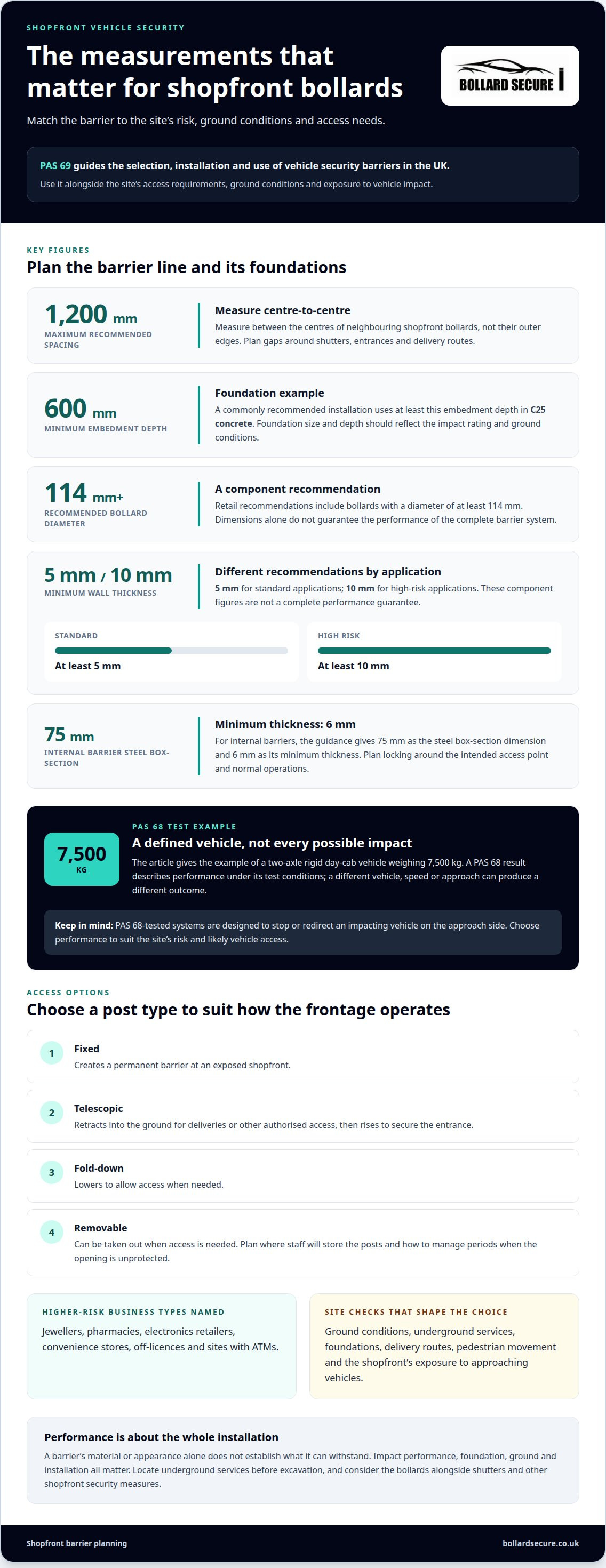
Effective ram raid prevention for shops starts with matching the barrier to the site, not simply choosing the largest post. In the UK, PAS 69 provides guidance on selecting, installing and using vehicle security barriers, and bollards should be spaced no more than 1,200 mm centre-to-centre. The right choice also needs to account for the level of risk and whether vehicles must still reach the premises.
Ram raid prevention for shops means protecting the frontage while keeping deliveries and authorised access workable. Fixed posts create a permanent barrier, while telescopic, fold-down and removable bollards can allow access when needed.
This guide explains how the main post types differ, what to consider when selecting and installing them, and why a product’s safety limits matter. You’ll also see how ground conditions, foundations, impact performance and site access shape a suitable solution for a UK shop.
Table of Contents
PAS 69 barrier selection and installation guidance
PAS 69 guides the selection, installation and use of vehicle security barrier systems in the UK. Apply it alongside the site’s access needs, ground conditions and exposure to vehicle impact.
Recommended barrier spacing
For shopfront bollards, the recommended maximum spacing is 1,200 mm centre-to-centre. This means measuring between the centres of neighbouring posts, not between their outer edges. Keeping gaps within this limit helps prevent a vehicle passing through the protected line. Plan the layout around shutters, entrances and delivery routes, so gaps protect vulnerable areas without blocking authorised access.
Building regulations and planning permissions
Planning and building-control requirements depend on the site and proposed work. Consider where the bollards will go and whether installation affects the shopfront or surrounding infrastructure, then resolve any applicable requirements before work begins. Grants and insurance discounts depend on the relevant scheme or policy, so installing barriers does not automatically qualify a business. Police crime-prevention teams, council community-safety teams and local business-safety partnerships may also offer relevant advice to help identify risks and coordinate security measures.
PAS 69 helps inform barrier selection, while PAS 68-tested systems are designed to stop or redirect an impacting vehicle on the approach side. Choose performance for the site’s risk and likely vehicle access. A barrier is a physical deterrent, not a substitute for assessing the whole shopfront, including roller shutters and other security measures.
Foundations transfer vehicle impact energy into the ground. Select foundation depth and size according to the barrier’s impact rating and ground conditions. A commonly recommended installation uses a minimum embedment depth of 600 mm in C25 concrete. Locate underground services before excavation; their position can affect where posts and foundations can safely sit.
For internal barriers, the guidance gives 75 mm as the steel box-section dimension and 6 mm as its minimum thickness. Plan locking so the barrier secures the intended access point without obstructing normal operations. Concrete barriers may provide a physical obstacle, but their suitability depends on the site and should not be assumed to establish tested impact performance. Their presence alone does not establish tested impact performance.
Product safety limitations
A PAS 68 test measures how a vehicle of defined mass and speed affects a barrier, including its penetration distance. Treat the result as performance under those test conditions, not proof that a post will stop every vehicle in every collision. For example, PAS 68 includes a two-axle rigid day-cab vehicle weighing 7500kg. A different vehicle, impact speed or approach can produce a different outcome.
That distinction matters in a shopfront assessment. Match the barrier’s impact performance to the site’s risk and likely vehicle access, rather than relying on a product label alone. PAS 69 provides selection and installation guidance. Appropriately specified non-certified bollards can also provide adequate protection for most commercial retail applications against opportunistic attacks using common vehicles. This does not make every non-certified post suitable for every street or traffic exposure.
Physical dimensions are another limit. Retail recommendations include bollards with a diameter of at least 114 mm. Wall-thickness recommendations are at least 5 mm for standard applications and at least 10 mm for high-risk applications. These figures describe components, not a complete guarantee of system performance. The foundation, ground and installation all affect how a barrier responds to impact.
Material affects durability, but it does not prove impact resistance on its own. Hot-dip galvanised mild steel and stainless steel are recommended bollard materials. A sturdy-looking post may still be unsuitable if its impact performance and installation do not match the site assessment. Concrete barriers are not a substitute for a tested security barrier when a defined impact rating is required.
For ram raid prevention for shops, consider how barriers interact with the pavement, pedestrian routes and traffic. A post positioned too close to a kerb or access point may leave vulnerable gaps or obstruct movement. A site-specific bollard installation assessment can help align the barrier layout with the shopfront and ground conditions.
Types of ram raid posts
Post types differ in how they protect retail premises and manage vehicle access. Fixed, telescopic, removable and crash-rated designs each suit different operating needs. The useful choice depends on the vulnerable frontage, the threat and whether vehicles need entry.
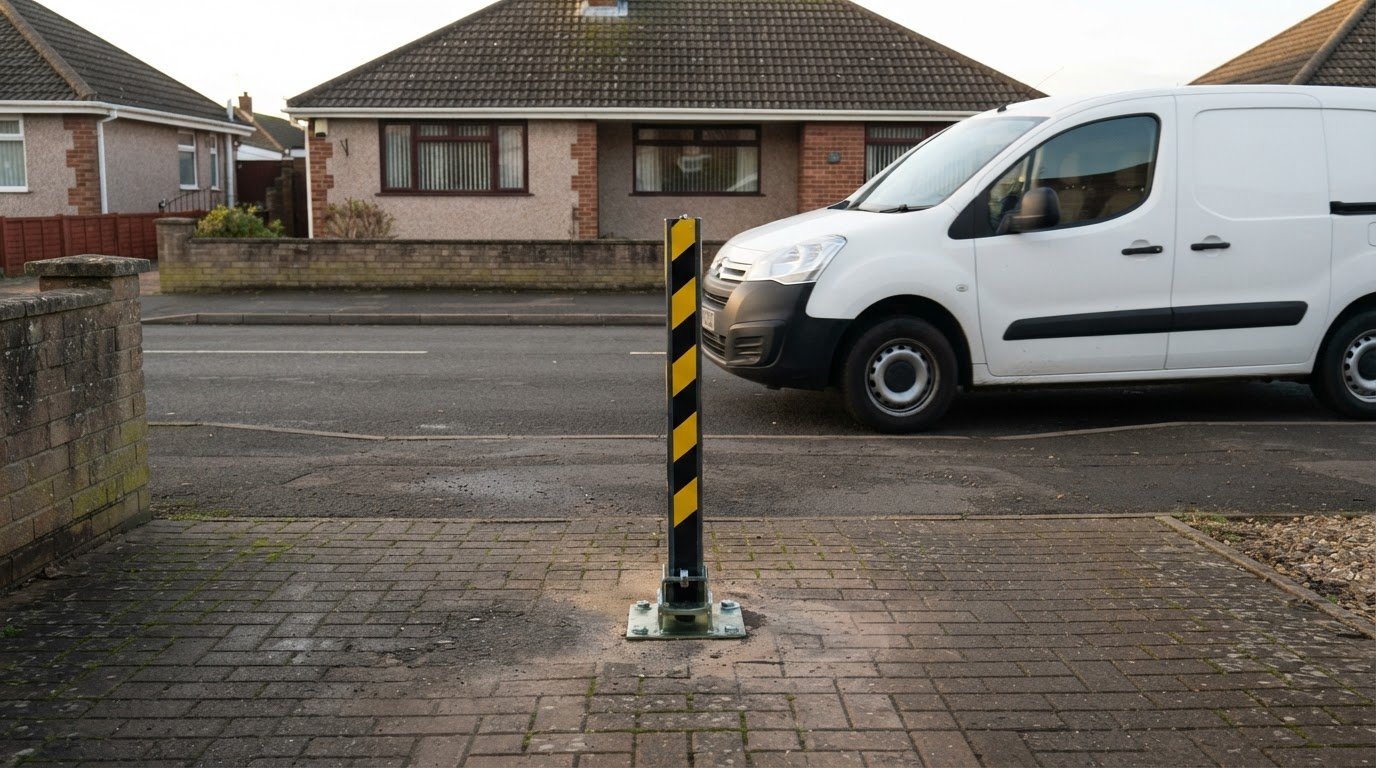
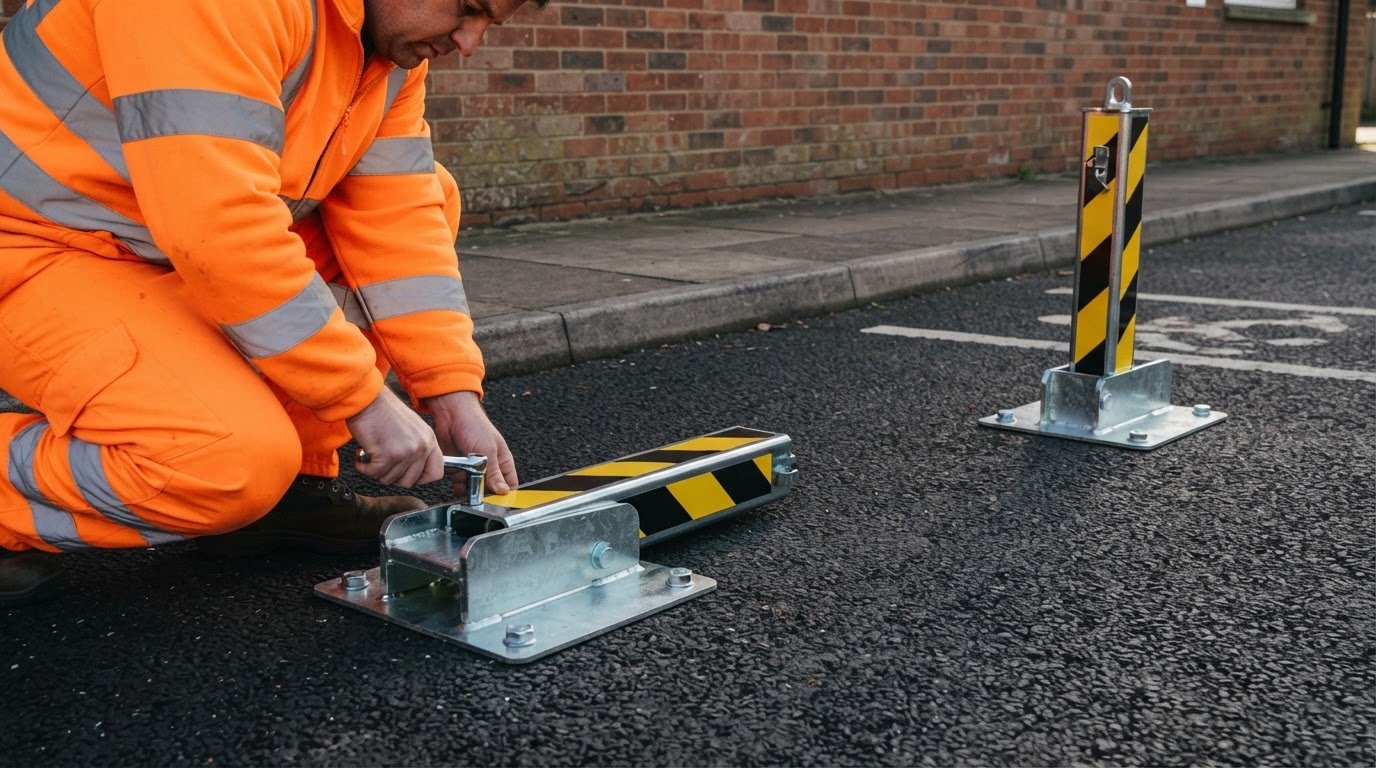
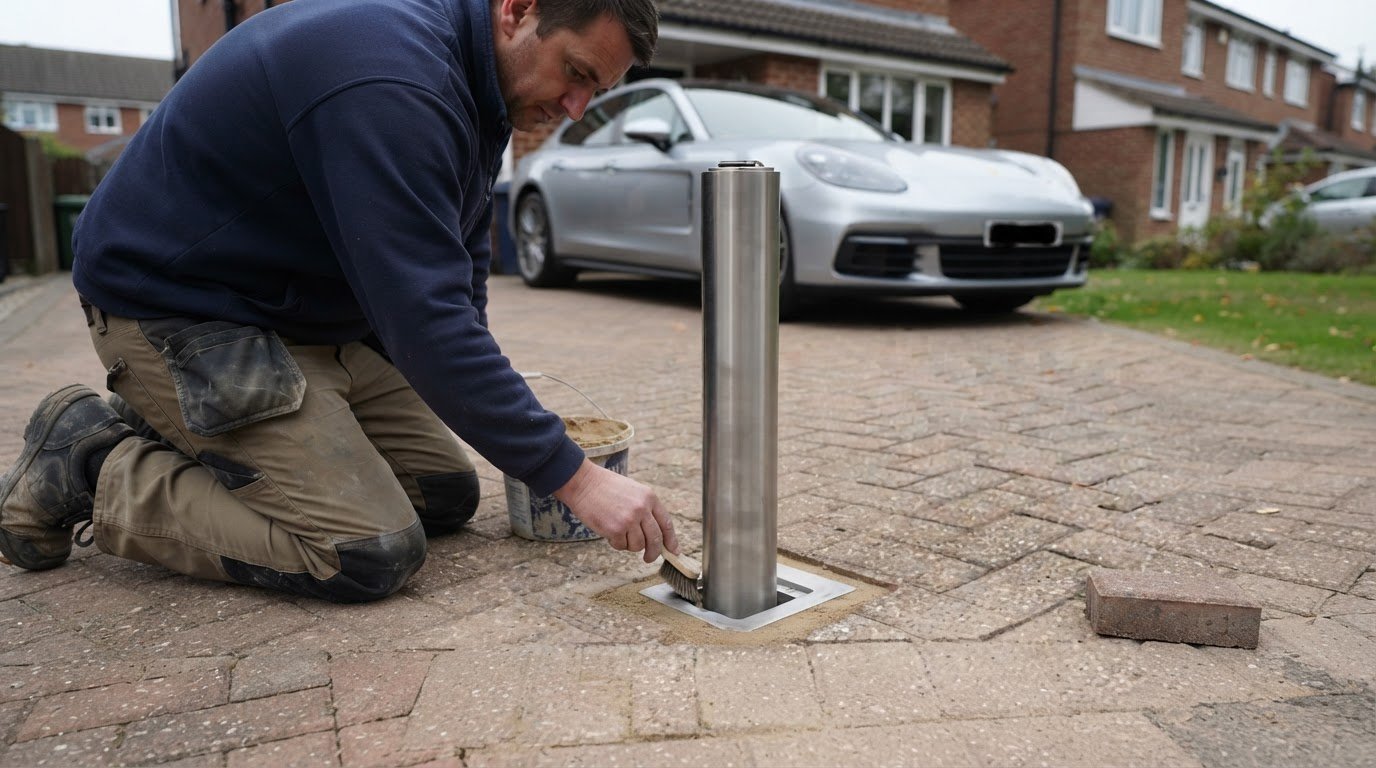
Static bollards create a permanent barrier at exposed shopfronts. Telescopic bollards retract into the ground for deliveries or other authorised access, then rise to secure the entrance. Fold-down bollards lower to allow access, while removable bollards can be taken out when needed. With removable models, staff need a plan for storing the posts and managing periods when the opening is unprotected. Crash-rated designs are tested against defined vehicle impacts; their rating describes performance under those test conditions.
Assess the premises by considering valuable stock, the shopfront’s exposure to approaching vehicles and existing protection. Jewellers, pharmacies, electronics retailers, convenience stores, off-licences and sites with ATMs are among the business types identified as higher risk. A delivery entrance may need different protection from a street-facing display window. Identify vulnerable points, consider vehicle access and plan the barrier layout around each risk.
How much do ram-raid prevention measures cost for a UK shop? The cost depends on the bollard type and number, the required impact performance, installation needs and ground conditions. Access requirements, excavation and foundation work can also affect the scope. Start by assessing the premises rather than assuming a standard package will fit.
During a ram raid, staff should put personal safety first, move away from the vehicle and avoid confronting offenders. Once safe, alert the emergency services and follow the shop’s incident procedure. Barriers are a security measure, not a reason to approach an active attack.
After an incident, preserve CCTV footage, photographs of damage, incident records and details of affected stock for the police and insurers. Record what happened and when, and keep relevant files intact. These records can help document the impact on the premises and support subsequent reporting.
What is a ram raid and which types of UK shops are most at risk?
A ram raid is an attack where criminals use a vehicle to smash through a shopfront, usually to steal goods. For theft, vehicle speeds can reach around 48 km/hr (30mph), so the risk involves both forced entry and serious damage to the premises.
Jewellers, pharmacies and electronics retailers may attract attention because their stock can be valuable and quick to remove. Convenience stores and off-licences are also identified as higher-risk UK businesses. Cash-and-carry wholesalers and premises with ATMs face different risks, as vehicles may target larger goods, cash or the building itself.
Risk depends on more than the type of shop. Consider whether vehicles can approach the frontage, how exposed the entrance is and where valuable stock is kept. A corner shop with a direct vehicle route to its windows has a different risk profile from a unit protected by street furniture or other physical barriers. An ATM can also make a premises a target, even if the machine and its contents are not insured under the policy.
The consequences can extend beyond stolen goods. Damage to the frontage may disrupt trading while glazing, shutters and internal areas are repaired. For an independent retailer, that interruption can matter as much as the immediate loss.
Use the assessment to identify the most exposed points first: the shopfront, delivery entrance, ATM or any route leading directly to stock. Then consider whether existing shutters and other security measures address those approaches. Match the protection to the likely threat rather than treating every retail frontage as the same.
For a practical next step, explore shopfront security options suited to your premises and vehicle access needs.
Bollard Secure
Bollard Secure supplies bollards and posts to help shops protect vulnerable frontages while managing vehicle access. The suitable type depends on whether the entrance needs a permanent barrier or occasional access for deliveries and other authorised vehicles.
Static Bollards provide a fixed option, while Fold-down Bollards, Telescopic Bollards and Removable Bollards allow access to be opened in different ways. Bollard Secure also offers an installation-only service for customers who have already purchased a bollard. These options can help create a practical layout around the shopfront and its daily use.
Consider which areas need protection and how vehicles use the premises. Contact Bollard Secure to discuss suitable bollard options for your shop.
Make your next security decision practical
Treat shopfront protection as part of everyday site planning. Consider how staff, deliveries and customers use each entrance, and how those patterns might change. This helps make ram raid prevention for shops a decision about both security and workable access, rather than a standalone purchase.
Bollard Secure offers Fold-down Bollards, Telescopic Bollards and Parking Posts for different access needs. The right option depends on the layout and how the premises operate. A conversation can help you explain what needs protecting and what vehicle access must remain possible.
Contact Bollard Secure for advice about choosing a suitable approach for your shop. A clear discussion is a practical way to move from concerns about the frontage towards a considered next step.
Frequently Asked Questions
What can be done?
Combine physical barriers with measures that improve visibility and detection. For example, pair a protected entrance with visible CCTV, good lighting and an intruder alarm. Keep access arrangements clear for staff and deliveries, and include security checks in opening and closing routines. A local business crime reduction partnership may also help retailers share crime-prevention advice.
What are ram raid posts?
Ram-raid prevention bollards are fixed into the ground or designed to retract, obstructing vehicle access to vulnerable areas. They form part of a site’s physical security, not a guarantee against every vehicle impact. Suitability depends on the bollard, its foundation and site conditions. Parking Posts have a different purpose: they reserve a parking space and are not security bollards.
Where are ram posts typically installed?
Bollards are commonly installed outside retail units with external roller shutters, around delivery bays and in car parks. They’re also used at warehouses, healthcare premises and public buildings where vehicles could reach vulnerable entrances or perimeter areas. At a shop, the best position depends on the vehicle approach and what needs protecting, such as a loading entrance rather than the main customer door.
What physical security measures prevent vehicles from reaching shopfronts?
Vehicle barriers, including suitably selected bollards, can create a physical boundary between traffic and a shopfront. Retailers can combine them with shutters, visible CCTV, lighting and intruder alarms for broader protection. Each measure has a different role: barriers restrict vehicle approach, shutters protect the opening, and cameras and alarms support detection. Plan the combination around entrances, delivery access and sightlines.
How much do ram-raid prevention measures cost for a UK shop?
Ground conditions, post type and installation requirements affect the cost.
How effective are bollards, planters and security shutters against ram raids?
Bollards can deter vehicle attacks, while PAS 68-tested systems are designed to stop or redirect an impacting vehicle under defined test conditions; performance is not guaranteed for every vehicle or collision. Planters can act as physical and psychological deterrents, though they take up more space. Rated roller shutters can complement barriers as part of wider shopfront security.
Comments