
Removable Bollards UK: A Practical Guide to Choosing the Right Solution
What if the best bollard for your site isn’t the one with the most features, but the one that fits how vehicles need to enter and leave? When comparing removable bollards UK options, start with the access pattern. A lift-out design can suit occasional vehicle access, while frequent use may call for a different solution.
A removable security bollard and a parking post aren’t interchangeable. Parking posts are designed to reserve a space and act as a deterrent, while security bollards help manage vehicle access or mark a boundary. Your choice also depends on the site layout and ground conditions, so assess these before settling on an installation approach.
This guide compares removable bollards with other options and explains how to match a product to your access needs. You’ll also learn how site assessment, a pre-installation CAT scan and professional fitting help plan the work, with a demonstration of how to use the bollard after installation.
Table of Contents
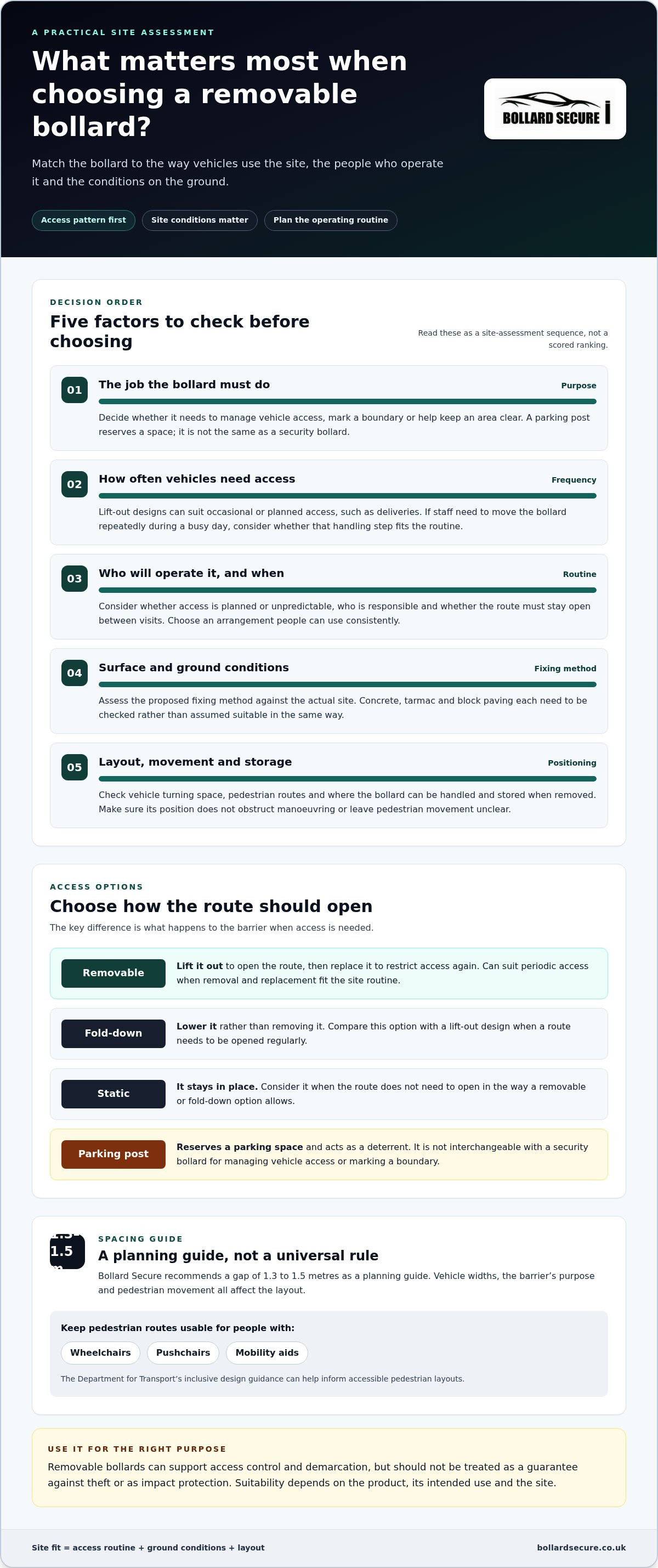
Removable bollards in the UK: uses and suitability
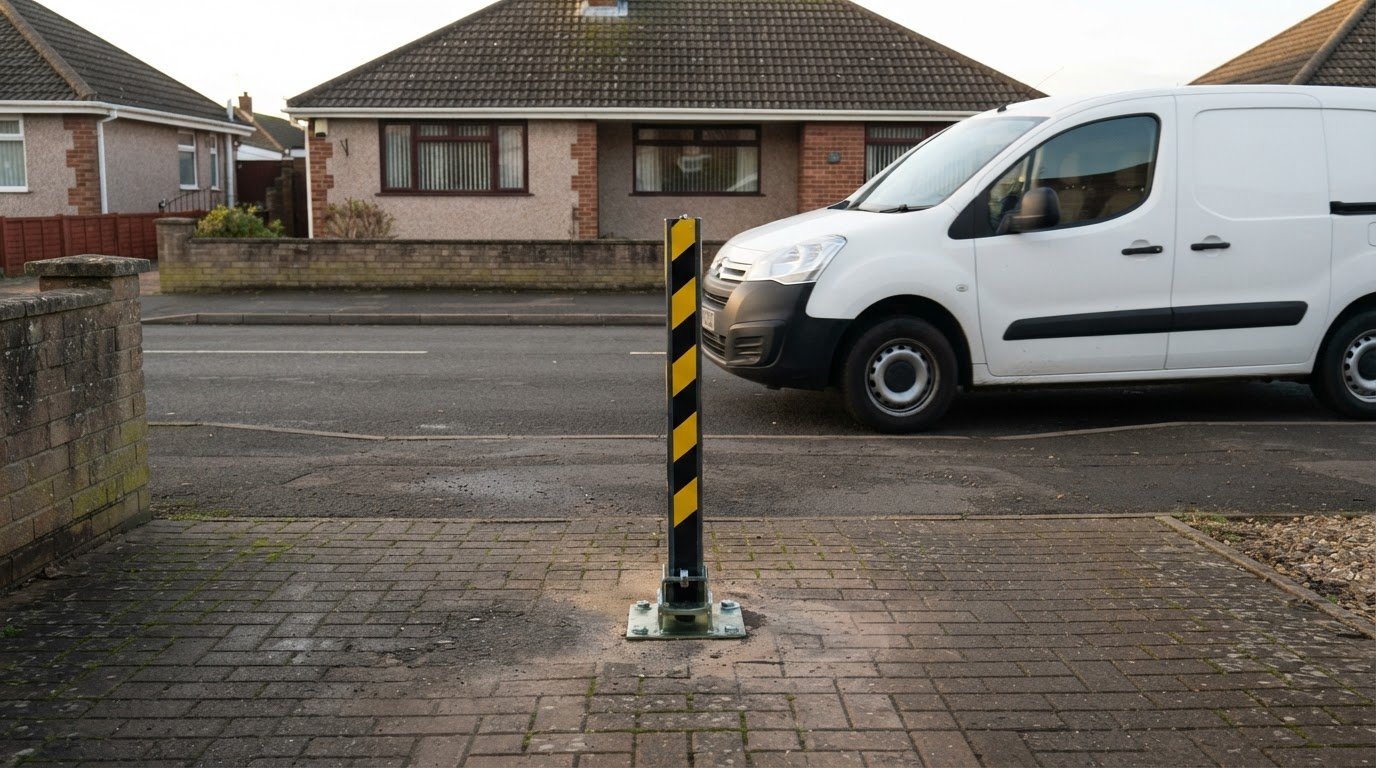
A removable bollard is a lift-out barrier for a place where vehicles need access at certain times but the route should be restricted at others. In a private car park, for example, it can help manage an entrance or mark an area that should remain clear when authorised vehicles aren’t using it. Lift the bollard out to open the route, then replace it when access needs to be controlled.
Unlike a permanent obstruction, a removable bollard can be taken out of the way to let vehicles through. This offers flexibility, but only if removal and replacement fit the site’s routine. Consider who needs access, how often they need it and whether the bollard will be lifted out occasionally or several times during a working day.
Removable bollards can support access control and demarcation, but shouldn’t be treated as a guarantee against theft or as impact protection. Suitability depends on the product, its intended use and the site. The broad range of types of bollards reflects their different roles, from managing traffic and marking boundaries to supporting security.
How does a removable bollard control vehicle access?
The principle is simple: lift the bollard out when a vehicle needs to pass, then replace it to restrict access again. Unlike a fixed post, it doesn’t have to remain across the route. This can suit a car park entrance used by authorised vehicles at set times, or an area that needs to be opened for occasional deliveries. If access is constant or frequent, consider whether lifting and replacing the bollard would fit the daily routine.
Is a parking post the same as a security bollard?
No. A parking post is designed to reserve a parking space. It acts as a deterrent to someone taking that space, but it isn’t a security bollard. A security bollard is the relevant option when the aim is to manage vehicle access or mark an area with a physical barrier. Match the product to the task: reserving a space, controlling entry or marking a boundary.
Before choosing, look beyond the access pattern. The surface and ground conditions affect which fixing method is suitable. Concrete, tarmac and block paving all need to be assessed rather than assumed suitable in the same way. Check the layout too: consider where the bollard will sit, whether it could interfere with vehicle manoeuvring and where it can be stored when removed. These details help establish whether a removable bollard is practical for your site or whether another access-control option better suits how the space is used.
Which removable bollard features matter for your UK site?
Begin with the job the bollard needs to do. Is it there to let authorised vehicles through at certain times, mark the edge of a car park or help manage a perimeter? These needs can overlap, but they affect the bollard’s position and how often it must be moved. Choose for the site’s routine rather than assuming one product will suit every access or security requirement.
Next, map the access pattern. Note which vehicles need entry, when they arrive and whether the route must stay open between visits. A product that works well for occasional access may become inconvenient if staff need to lift it out repeatedly during a busy day. Think about who will operate it and how the task fits into their normal duties.
How should access frequency shape the choice?
Removable bollards suit routes that need to open and close periodically. They can work for a service entrance used for planned deliveries, for example. If vehicles need a route to stay clear, a lift-out design may add an unnecessary handling step. A fold-down bollard can be lowered rather than removed, so compare the two options against how the site is used.
Frequency isn’t the only consideration. Ask whether access is planned or unpredictable, and whether one person or several people will manage it. A clear routine helps reduce the chance of leaving the bollard out when the area should be restricted or replacing it before a vehicle has cleared the entrance. Choose an arrangement that the people responsible can use consistently.
What should you consider about the ground and layout?
The fixing method should follow a site assessment, not just the name of the surface. Concrete, tarmac and block paving each need to be assessed to establish whether the proposed fixing method is suitable. Check the layout too: allow for vehicle turning space, pedestrian routes and a practical place to handle and store the bollard when it is removed.
Spacing also needs thought. Bollard Secure recommends a gap of 1.3 to 1.5 metres as a planning guide, not a universal rule for every site. Vehicle widths, the purpose of the barrier and pedestrian movement all affect the layout. Keep routes usable for people with wheelchairs, pushchairs and mobility aids. The Department for Transport’s inclusive design guidance can help inform accessible pedestrian layouts.
Walk the proposed line before deciding on positions. Look at entrances, corners, marked bays and the route vehicles need to follow. This can reveal whether a bollard might interfere with manoeuvring or leave a pedestrian route unclear. It also turns a general requirement, such as perimeter management, into a practical installation plan.
The best removable bollard for your UK site is one that suits its access routine, ground conditions and layout together. Bollard Secure supplies bollards and provides professional installation, helping you move from choosing a product to planning the fitting. Explore removable bollard solutions for a practical next step.
Removable bollards versus other options: which access solution fits?
The main difference is how the route opens. A removable bollard is lifted out, a fold-down bollard is lowered, and a static bollard stays in place. Choose according to the site’s access routine rather than an assumed ranking of strength or security. The comparison below focuses on when vehicle access needs to be available.
Each format addresses a different access pattern. Suitability still depends on the site layout and intended use, so use the table as a comparison rather than a substitute for assessing the installation requirements.
When might a removable bollard suit better than a fold-down bollard?
Choose between these options by considering what needs to happen to open the route. A removable bollard is lifted out; a fold-down bollard is lowered. For a route opened only at planned intervals, either arrangement may be worth considering. Compare how each action would work for the people, vehicles and routine on your site.
For example, consider a private car park where access is needed for scheduled deliveries but restricted at other times. A removable option may fit if staff can manage taking it out and putting it back. If the bollard needs to stay in place while the route is open, a fold-down format may be more relevant to assess.
When is a static bollard a better fit?
A static bollard suits a location where the purpose is permanent perimeter demarcation or protection, rather than opening a route for routine vehicle access. It stays in position, so it isn’t suited to an entrance that must regularly be cleared. Removable bollards used for intermittent access serve a different purpose: the barrier can be taken out when authorised vehicles need to pass.
Keep parking posts separate from this comparison. They’re designed to reserve a parking space and act as a deterrent, not as security bollards. If the main requirement is discouraging others from using a particular bay, a parking post may suit that purpose. If you need to manage vehicle entry or mark a perimeter, compare the bollard options instead.
For a home driveway, first decide whether you need to reserve a space, open and close the entrance periodically or keep a boundary permanently marked. That distinction helps narrow down the product type before you consider the layout and installation. A removable bollard can be practical where intermittent access is central to the requirement, but it isn’t automatically right for every driveway or car park.
How are removable bollards assessed and installed across the UK?
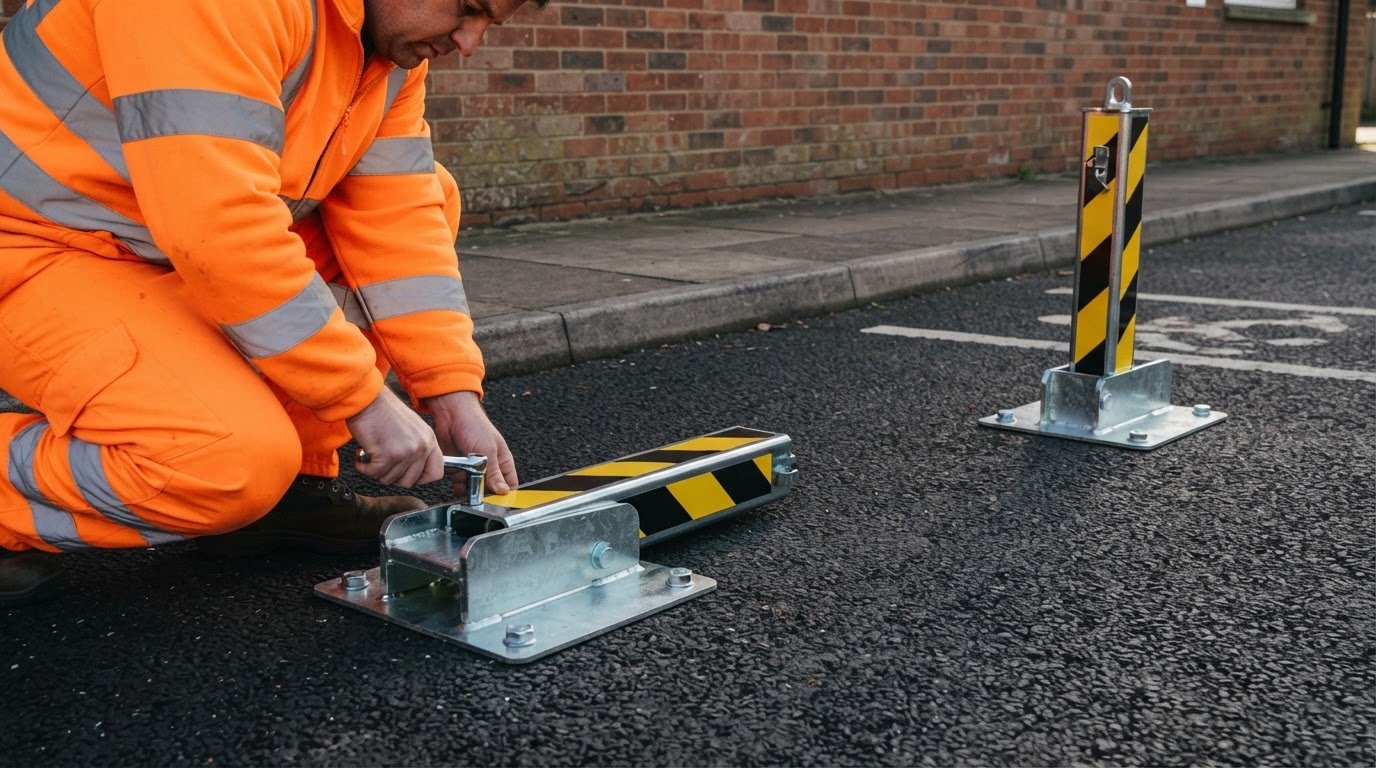
A suitable installation starts with the site, not a presumed fixing method. The process considers where the bollard will sit, how vehicles use the route and what the ground can support. Bollard Secure provides supply and professional installation across the UK, with the approach shaped around the site and access requirements.
Assess the site. Review the proposed position, access needs and surrounding layout.
Locate underground services. A pre-installation CAT scan helps locate cables and pipes before digging.
Choose a suitable fixing method. Assess the surface and site conditions before deciding how the bollard can be installed.
Fit and hand over. After installation, the installer demonstrates how to use the bollard.
What happens before installation begins?
Before digging, Bollard Secure carries out a CAT scan to locate underground cables and pipes. This gives the installation team information about services below the proposed work area. The site is also assessed before a fixing method is selected, so the decision reflects the actual ground and intended bollard position rather than assumptions based on the surface alone.
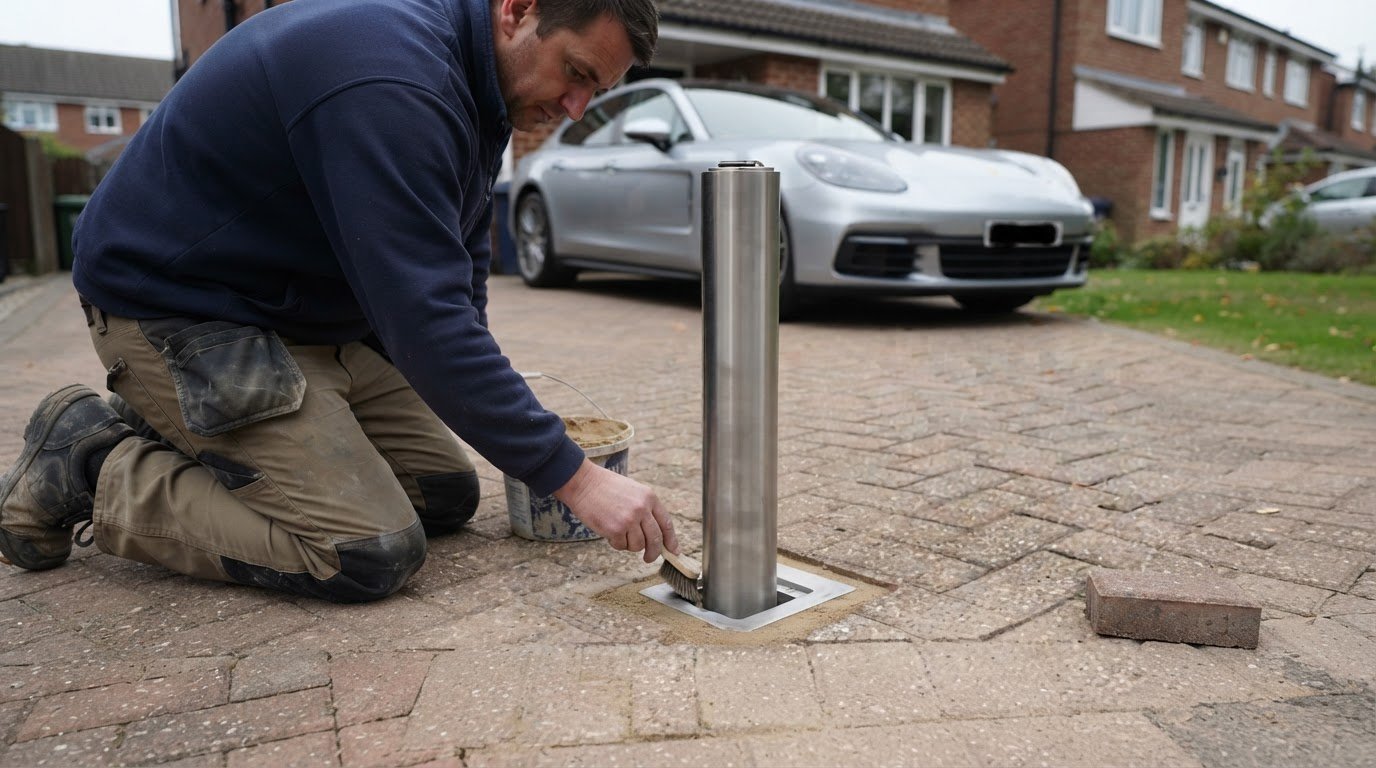
Concrete, tarmac and block paving all need to be assessed for suitability. A surface name by itself doesn’t establish which fixing method is appropriate. The assessment considers site conditions and the planned use, including how the bollard will manage vehicle access. This is useful where a car park has more than one surface type or where the proposed position is close to an entrance or boundary.
What should customers expect after fitting?
After fitting, the installer demonstrates how to use the bollard before leaving. This handover gives the people responsible for access control a practical opportunity to see how the product operates, rather than relying on a product description alone. It also helps establish a clear routine for the site.
Most installations take a few hours, though the time can vary with the site and work required. The installation charge includes travel, labour and materials. If you already own a bollard, Bollard Secure also offers an installation-only service, providing a fitting option separate from purchasing a product with installation.
This site-first process helps make removable bollard installations more straightforward: assess the ground, select a suitable fixing approach, install the bollard and finish with a demonstration. For a supply-and-install solution or fitting for a bollard you already have, request a removable bollard installation quotation.
How to choose and order removable bollards from Bollard Secure
A clear brief makes it easier to move from product selection to planning the work. Start with what the bollard needs to do, then describe the site and how vehicles use it. Bollard Secure can supply and install a bollard or provide installation-only fitting if you already have one.
Define the access need. Explain when vehicles need to pass, how often the route must open and whether the aim is access control, demarcation or both.
Share the site details. Describe the proposed location, surface and layout. This helps establish what needs assessment before a suitable fixing method is chosen.
Select a service route. Choose supply plus installation if you need the product and fitting, or installation-only if you already own a bollard.
Request a quotation. Set out the requirement so the work can be considered in context, rather than treated as a standard fit for every site.
Which service route should you take?
For a complete project, Bollard Secure supplies removable bollards and provides professional installation. The process includes a site assessment, a CAT scan before digging to locate underground cables and pipes, and a demonstration of use after fitting. If you’ve already purchased your bollard, the installation-only service provides a separate route. Installation is available across the UK for eligible products.
Think about what you already have in place. If you still need to select a bollard, supply plus installation brings product choice and fitting together. If the bollard is already yours, installation-only focuses on fitting it after the site has been assessed. In either case, the ground and surface inform the fixing method, so share accurate details about the intended position and access pattern.
What happens after you request a quotation?
Bollard Secure provides free, no-obligation quotations, with responses usually arriving within 24 hours. Sharing the access requirements and site information helps make the quotation relevant to the work being considered. There’s no obligation to proceed, so you can review the proposed route before making a decision.
For removable bollard projects, keep the first conversation practical: explain where access needs to be controlled, how often vehicles need to pass and whether you need supply with fitting or installation for a bollard you already own. This gives the team a useful starting point for discussing the requirement and next steps.
Ready to talk through a removable bollard requirement? Request a free, no-obligation quotation.
Take the next step towards better-managed access
The right choice starts with a clear picture of how your site needs to work. Before moving ahead, note who needs vehicle access, when it’s required and what you want the bollard to achieve. That gives you a practical starting point for discussing a solution tailored to your requirements, rather than choosing on appearance alone.
For removable bollard projects, professional support can help turn that requirement into a considered plan. Bollard Secure is Sold Secure Approved and fully insured, and has a 5-star rating. These credentials relate to the company, not an individual approval claim for every product.
Whether you’re planning a new installation or need fitting for a bollard you already own, take the next step at your pace. Request a free, no-obligation quotation and start a straightforward conversation about your site’s access needs.
Frequently Asked Questions
Can removable bollards provide security for a private site?
Removable bollards can help manage vehicle access and mark a boundary, but they can’t guarantee against theft. Their role is to restrict or organise access when the bollard is in place. Don’t assume a particular impact-resistance rating unless it applies to the specific product. For removable bollards, consider the intended purpose first, then have the installation method assessed against the ground conditions and layout.
Do removable bollards need planning permission in the UK?
Planning permission is usually not needed for installations on private land, but requirements can vary with the property and proposed work. If you’re unsure, check with your local authority before ordering. Consider who owns the land and whether the proposed position affects a shared or public area. Don’t assume the same answer applies to every site; the relevant permissions depend on the circumstances of the property.
Can removable bollards be installed on concrete, tarmac or block paving?
Yes. Installation on surfaces such as concrete, tarmac and block paving can be considered, but the site must be assessed to establish whether the fixing method is suitable. The surface type alone doesn’t settle the question. Before work begins, Bollard Secure carries out a CAT scan to locate underground cables and pipes. This helps inform the planned work, particularly where services may run beneath the proposed bollard position.
How far apart should removable bollards be positioned?
Bollard Secure recommends spacing bollards 1.3 to 1.5 metres apart as a planning guide. The final layout should suit the opening and the vehicles that need to use it. Consider the path a vehicle takes when turning into a car park, as well as the boundary you need to mark. Treat the recommendation as a starting point, then assess the full site layout and intended access.
Can Bollard Secure install a removable bollard I have already bought?
Yes. Bollard Secure offers an installation-only service for customers who already own a bollard. The installation charge covers travel, labour and materials required for the work. The team assesses the site and carries out a CAT scan before digging. After fitting, the installer demonstrates how to use the product. Have the bollard’s product information available so the installation can be planned in line with its specifications.
How long does removable bollard installation take?
Most Bollard Secure installations take a few hours, although the time depends on the site and work required. The company also states that a driveway can be secured in under a week, but this shouldn’t be treated as a guaranteed timeframe for every project. Installation duration and the wider project timeline are different considerations, so allow the site assessment and work involved to guide expectations.
Can I return a removable bollard if it is unsuitable?
Items may be returned within 14 days of the purchase date, subject to the terms and conditions. Review the relevant product and return terms before sending an item back. Many products are made to order, so delivery times can vary by item. Bollard Secure confirms the expected lead time when you place an order. Next-day delivery isn’t offered as standard, so don’t plan around it.
Comments