
Replacing Old Driveway Bollards: Costs and Security Choices
A secure replacement starts below ground: professional security bollards are typically installed at least 300-450 mm deep, with concrete foundations. When replacing old driveway bollards, the right depth and design depend on the security level you need, the driveway surface and the space available for excavation. Getting those choices right helps protect your property without needlessly disturbing paving or planting.
It’s reasonable to want stronger access control while keeping the driveway practical to use and the surrounding landscaping intact. This guide explains typical installation depth, what affects replacement costs and how fold-down, removable, telescopic and static options differ. You’ll also see how the bollard type, existing foundations and underground obstructions can shape the work, so you can make a clear decision about security, access and the impact on your driveway.
Table of Contents
Choosing an appropriate security level
Start by identifying the risk you want to address: unauthorised vehicle entry, or drivers using your entrance to turn or park. Bollards create a physical obstacle, but their position and operating style must still allow residents, deliveries and emergency access. A driveway used frequently by vehicles may need a different arrangement from an entrance that sees little traffic.
Choose the mechanism around that daily routine. Fixed bollards provide a permanent boundary, while fold-down models lower to let vehicles pass. Telescopic bollards retract into a ground socket, and removable bollards lift out when access is needed. Automatic systems can suit regular controlled entry, but require mains power and control wiring. Removable models may suit a site with a high water table better than telescopic ones.
When considering Sold Secure-rated bollards and locks, check the rating for the exact product and consider how it will be installed. A rating alone cannot determine whether a bollard suits your driveway. Match the security requirement with the access routine and locking method. A bollard is a physical security measure, not a guarantee against vehicle theft.
Installation depth also affects the choice. Professional security bollards are typically installed at least 300-450 mm deep with concrete foundations. A bollard rising 500 mm above the driveway may need a much longer casing below ground. Before excavation, installation teams use a CAT scanner to survey for underground cables, helping identify constraints that could affect the socket or foundation.
For weather resistance, consider the bollard’s material and finish. Steel bollards are commonly galvanised or powder-coated to help protect against rust and corrosion. Inspect the finish, lock and moving parts regularly, and keep any ground socket clear of debris so the bollard can operate as intended.
Balance the security requirement with access patterns and ground conditions. When replacing old driveway bollards, assess these factors before choosing fixed, retractable or removable security bollards.
Removing and replacing existing bollards
Begin by checking the bollard, its socket and the surrounding ground. Whether the existing foundation can remain will affect how the old bollard is removed and the replacement installed.
Assessing existing bollards
Check each bollard for stability, alignment and smooth operation, especially if it telescopes or locks. A loose post, damaged mechanism or leaning shaft may indicate a problem below the surface. If the ground socket and foundation remain in good condition, it may be possible to replace only the bollard or locking mechanism. Fixed bollards may be secured with concrete or bolts, so removing them differs from lifting out a removable post.
Tools and materials for replacement
Replacement work may involve excavation tools, lifting equipment, a new bollard and, if needed, a ground socket and concrete. A CAT scan before digging helps locate underground cables and pipes. Removable bollards typically sit in concrete or a purpose-designed socket and need a suitable storage place when lifted out. Telescopic bollards have a casing below ground, so replacing one can involve more excavation than replacing a removable model.
Safety risks during replacement
Excavation can damage underground cables and pipes, while heavy bollards and broken concrete create lifting and handling risks. Keep vehicles and pedestrians away from the work area, and manage dust and loose debris. A CAT scan helps locate underground cables before digging, but the socket, foundation and surrounding ground also need careful assessment. Automatic systems involve mains power and control wiring, adding electrical work to the job.
Disposing of old bollards
Separate metal bollards from concrete where practical, since these materials require different handling. Keep sharp metal edges and heavy concrete pieces contained during removal and transport. For one or two lift-out or telescopic bollards, rubble bags may be sufficient instead of hiring a skip. If the old socket and foundation are sound, retaining them can avoid unnecessary excavation; a planned bollard replacement project can account for what must be removed and cleared.
Protecting landscaping and controlling vehicle access
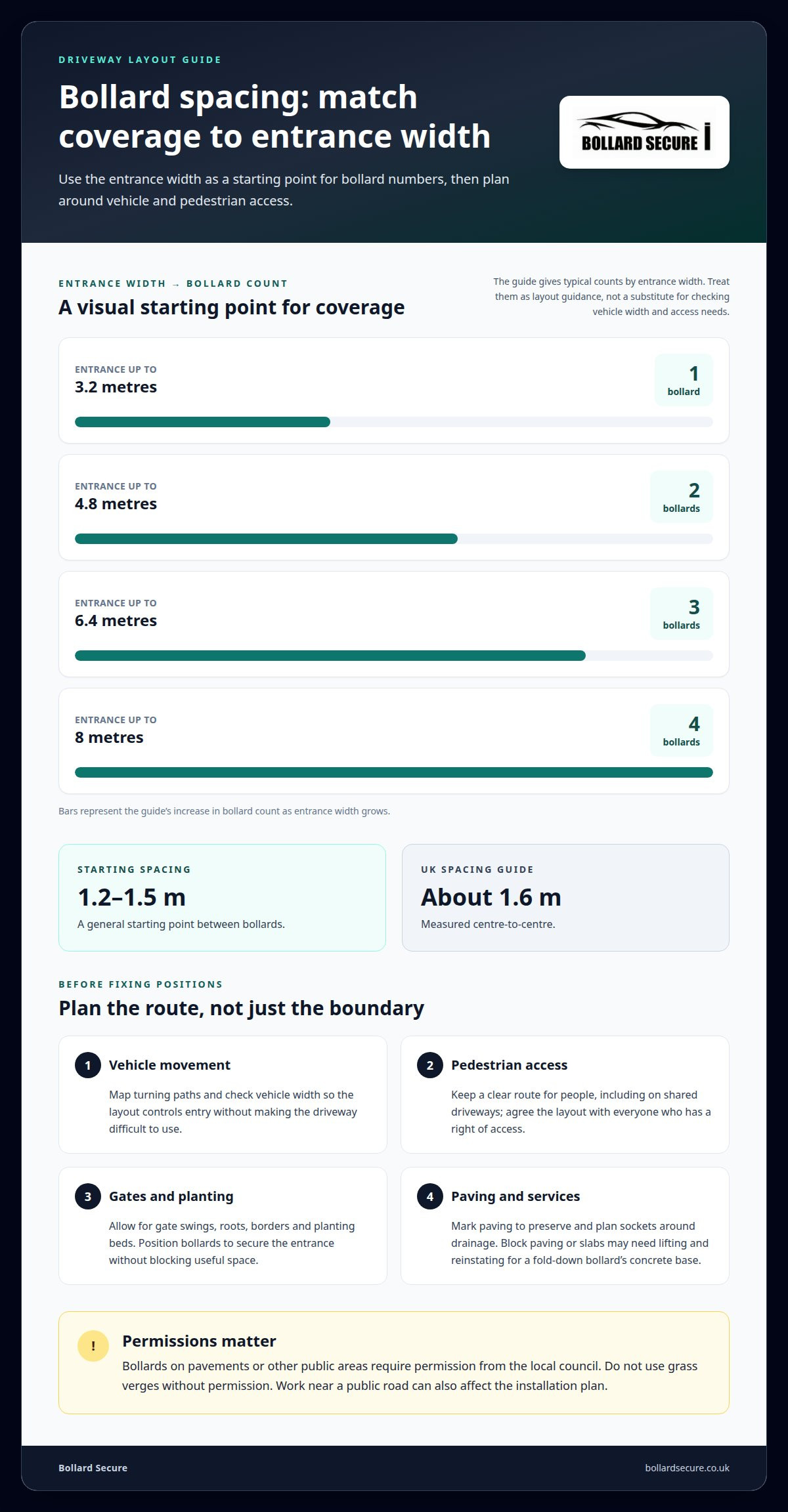
A well-planned bollard layout controls vehicle entry without making the whole driveway difficult to use. Before installation, map vehicle turning paths, pedestrian routes, gates and planting beds. Bollards placed too close to a gate can obstruct its swing; placed across a footpath, they can make daily access awkward. Aim to protect the entrance while keeping a clear route through the space.
Spacing helps balance access with coverage. A general starting point is around 1.2 to 1.5 metres between bollards, while a UK spacing guide uses roughly 1.6 metres centre-to-centre. In that guide, an entrance up to 3.2 metres wide typically needs one bollard; up to 4.8 metres, two; up to 6.4 metres, three; and up to 8 metres, four. Treat these as layout guidance, not a substitute for considering vehicle width and access needs.
Plan each socket and concrete foundation around roots, borders and drainage to protect existing landscaping. Mark paving that should remain undisturbed, then position bollards to control access at the entrance rather than blocking useful space across the drive. The surface matters too: block paving or slabs may need to be lifted and reinstated for a fold-down bollard’s concrete base.
Include pedestrian access in the plan. If a driveway is shared, agree the layout with everyone who has a right of access before installation. Bollards on pavements or other public areas require permission from the local council; do not use grass verges without permission. Work near a public road can also affect the installation plan. Map vehicle and pedestrian routes first, then position bollards to secure the entrance without sacrificing planting or everyday access.
How do I assess whether old driveway bollards need replacing?
Assess each bollard in place, then test its operation and inspect the surrounding ground. Check whether the post stands upright, feels stable and aligns with neighbouring bollards. Operate fold-down or telescopic models and note any sticking, incomplete movement or difficulty locking. A removable post should fit securely in its socket. These checks can help distinguish a worn bollard from a problem with its foundation or socket.
Next, look for visible damage. Dents, cracks, loose fixings or a leaning post may indicate an impact or movement below ground. On steel, check for corrosion or damage to the coating, which helps protect against rust. A worn finish alone does not prove that a bollard has failed, but exposed metal and structural damage need closer attention. Compare neighbouring posts: one that sits out of line may have a local foundation issue.
Consider whether the bollard still suits your access needs. A fixed post may obstruct regular changes to parking, while a removable model may no longer work if there is nowhere safe to store it. Check that locking parts engage properly and moving mechanisms operate without obstruction. If the post is stable and its socket and foundation remain in good condition, replacing only the bollard or locking mechanism may be possible.
Identify the cause before deciding what to replace. A loose post may need foundation work, while a damaged lock may need a mechanism replacement rather than a complete installation. If a vehicle impact has shifted the bollard, assess its alignment and foundation together. Finally, confirm that the replacement will control vehicle access without obstructing pedestrians or routine driveway use.
For replacement work involving installation, use the bollard installation service to address the post and its ground setting as one job.
Bollard Secure: Fold-down Bollards
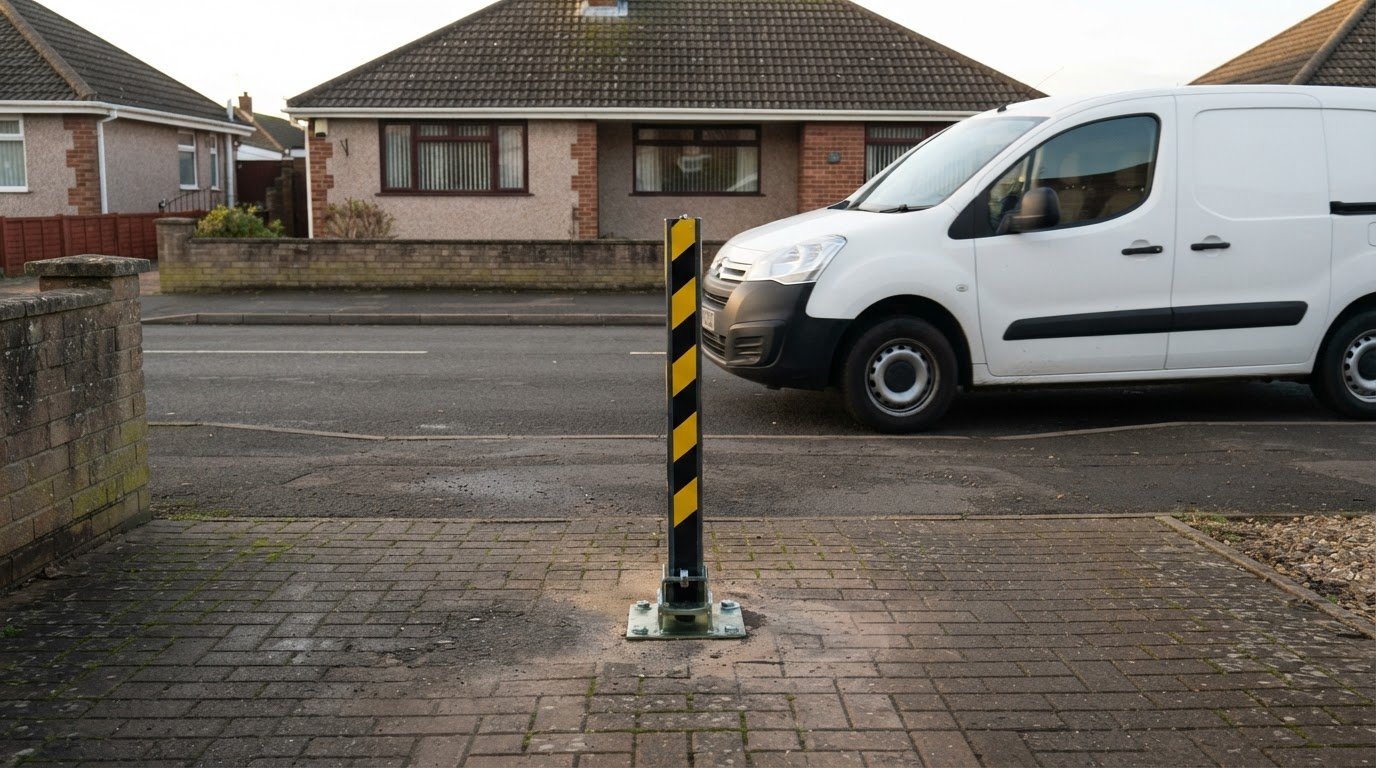
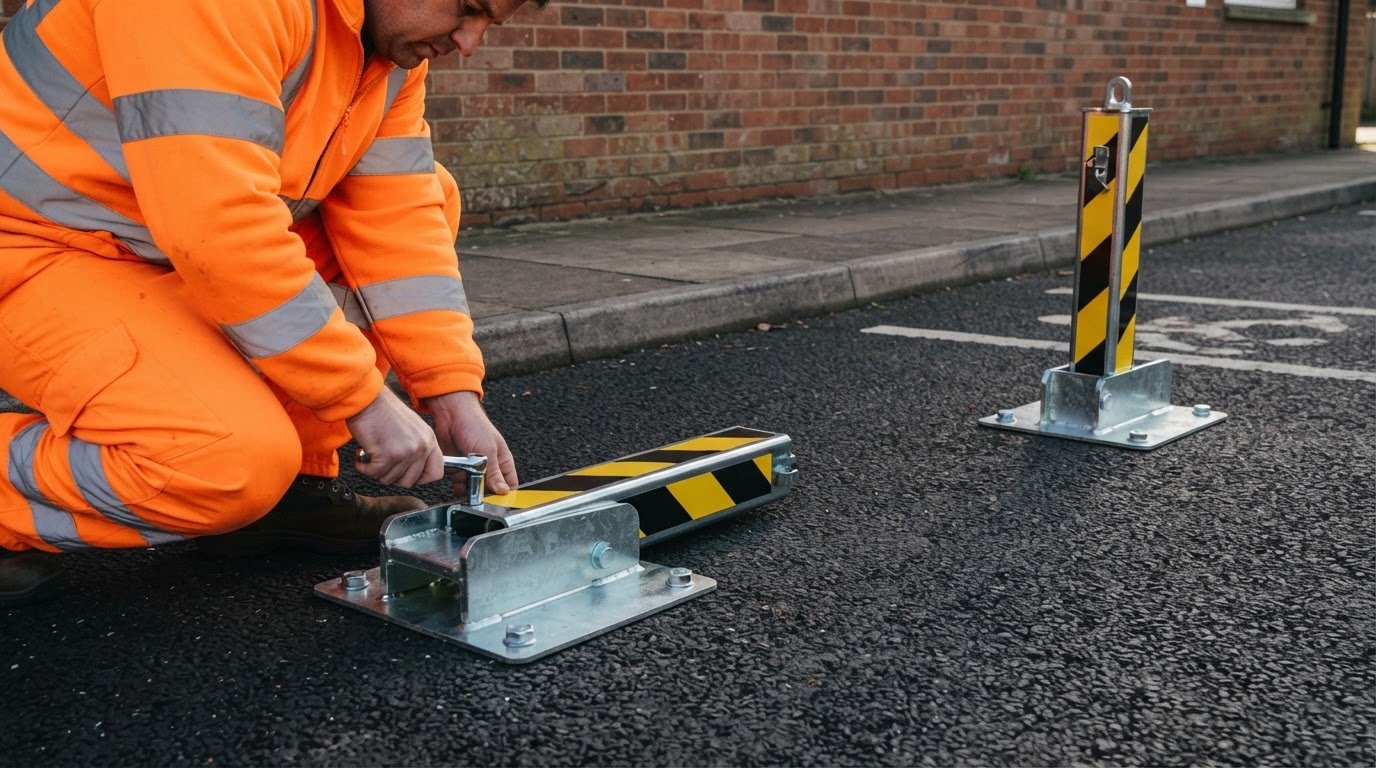
Bollard Secure offers fold-down bollards for driveways that need a physical barrier but also require vehicle access. Lower the post when you need to drive through, then raise it again to secure the entrance. The right choice depends on how often access is needed and whether you have room to store a post.
For a different access routine, telescopic bollards retract into a ground socket, while removable bollards lift out and need a safe storage place. Parking posts can suit a straightforward parking-control need. Consider the driveway layout, existing ground socket and how the bollard will be used before choosing a replacement.
Contact Bollard Secure to discuss a fold-down or telescopic bollard for your driveway, or arrange installation of a bollard you have already purchased.
Plan your next driveway upgrade
Before replacing old driveway bollards, decide what the upgrade needs to achieve in everyday use. Consider who needs access, how often vehicles enter and whether the layout must accommodate deliveries, visitors or changing parking needs. A clear picture of these routines makes it easier to choose a practical arrangement rather than simply matching the old installation.
Bollard Secure supplies and installs Fold-down Bollards and Telescopic Bollards, as well as Parking Posts for reserving spaces. The right option depends on how you want the entrance to work and how much space is available. When planning the project, consider changes to landscaping or access since the existing bollards were installed.
Contact Bollard Secure to discuss your driveway and the security option that fits your plans. A considered upgrade can make your entrance work better for the way you use it every day.
Frequently Asked Questions
How Deep Should a Bollard Be Buried?
Professional security bollards are typically installed at least 300-450 mm deep with concrete foundations. The casing beneath ground can extend much further than the visible post, so don’t judge installation depth by the bollard’s above-ground height. Ground conditions, the product design and underground services all affect the excavation. A CAT scan helps locate underground cables before digging begins.
DIY or Professional Installation?
Professional installation is useful for complex driveway work, particularly when the replacement requires a new ground socket or foundation. Excavation can encounter buried cables or pipes, and a poorly set socket or foundation can affect operation. A surface-mounted parking post is a different product: it reserves a space rather than providing the same function as a security bollard. Choose the product to suit the need and the groundwork involved.
What types of replacement driveway bollards are available in the UK?
UK options include static, fold-down, telescopic and removable bollards. Static models stay in place; fold-down and telescopic types allow vehicle access without storing a separate post, while removable models lift out of their socket. Bollard Secure also supplies Parking Posts to reserve parking spaces. These are deterrents, not security bollards.
How much do driveway bollards cost to buy and install in the UK?
These are the listed fully installed price ranges; the site also notes that a separate installation fee applies. The final choice depends on the product and site requirements, so distinguish the listed product price from any separate fitting charge when planning your budget.
What is the difference between fixed, removable, folding and automatic bollards?
Static bollards stay permanently in position and suit locations where vehicle access is not routinely required. Removable bollards lift out of a socket and need a safe place for storage. Fold-down models lower to let vehicles through, while automatic bollards use powered controls. A household with frequent vehicle movements may prefer an access-friendly mechanism to a permanent barrier.
How do I remove old driveway bollards and install new ones?
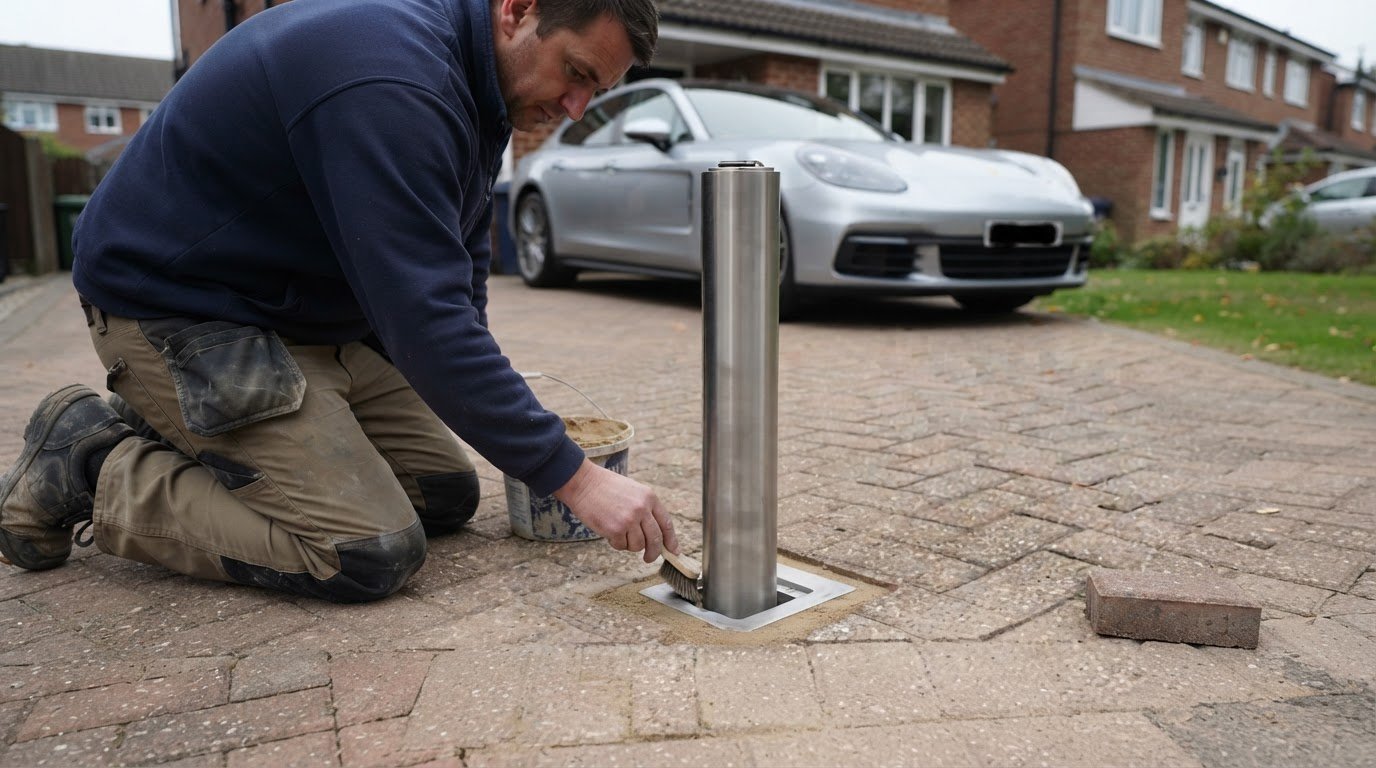
First identify how the existing bollard is fixed and whether its socket and foundation can be retained. Before excavation, survey the ground for underground cables and pipes. Remove the old post and any unsuitable foundation, then prepare a replacement socket or base to suit the product. Finally, check that the bollard is aligned, stable and operating correctly, including its lock or movement mechanism.
Comments